


₦0
Your Customer Doesn’t See Your Org Chart. They Experience Your Brand.
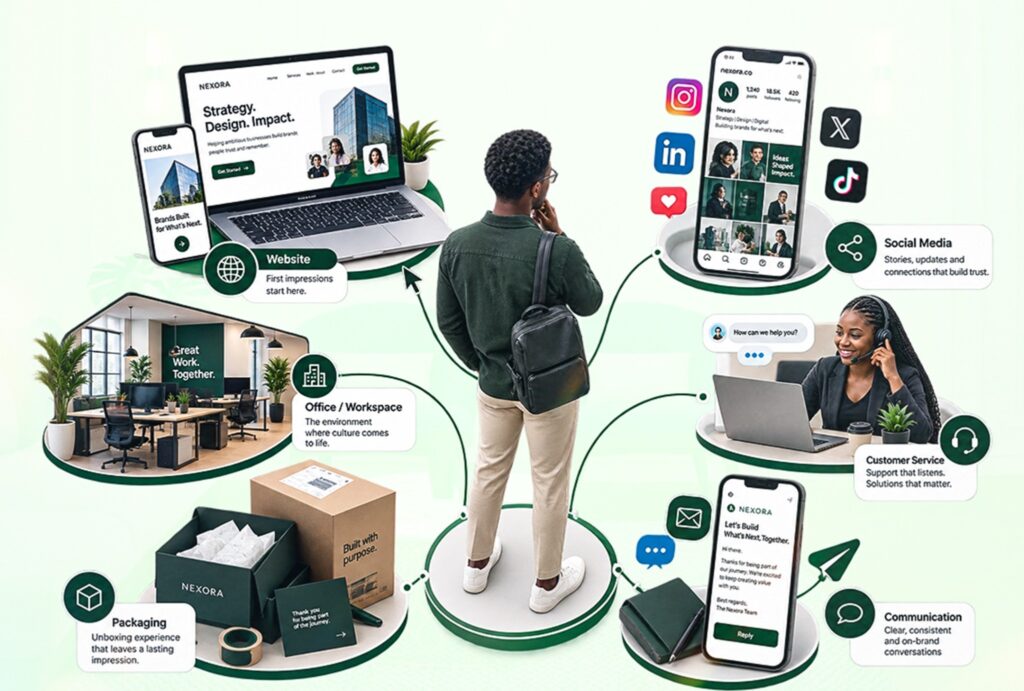
Your Customer Doesn’t See Your Departments
Your marketing team manages the campaign.
Sales handles the enquiry.
Operations fulfils the order.
Customer service answers the complaint.
Procurement works with the supplier.
HR manages the employee experience.
Another team manages the office.
Internally, these are different departments with different responsibilities.
Your customer doesn’t see any of that.
They see one business.
They see the Instagram post.
They visit the website.
They speak to sales.
They receive the product.
They open the packaging.
They contact customer service.
They walk into the office.
To the customer, none of these experiences exist in separate boxes.
They become one impression.
One company. One experience. One brand.
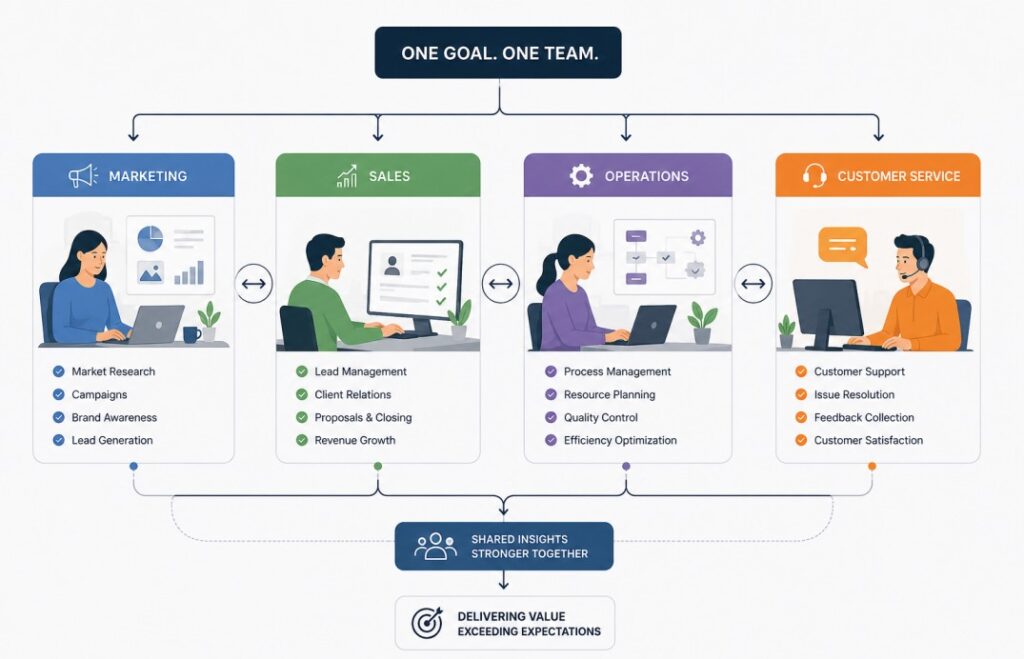
Inside a Business, Everything Is Divided. Outside It, Everything Is Connected.
Businesses need departments.
They create structure, accountability and specialised expertise.
The problem begins when the customer experiences the consequences of those divisions.
Marketing may promise speed.
Operations may take several days to deliver.
Sales may communicate one thing.
Customer service may communicate something completely different.
The website may feel premium.
The physical materials may feel ordinary.
No single department necessarily created the problem.
But the customer doesn’t assign blame by department.
They simply think:
“This is what dealing with this company feels like.”
That is the gap businesses often miss.
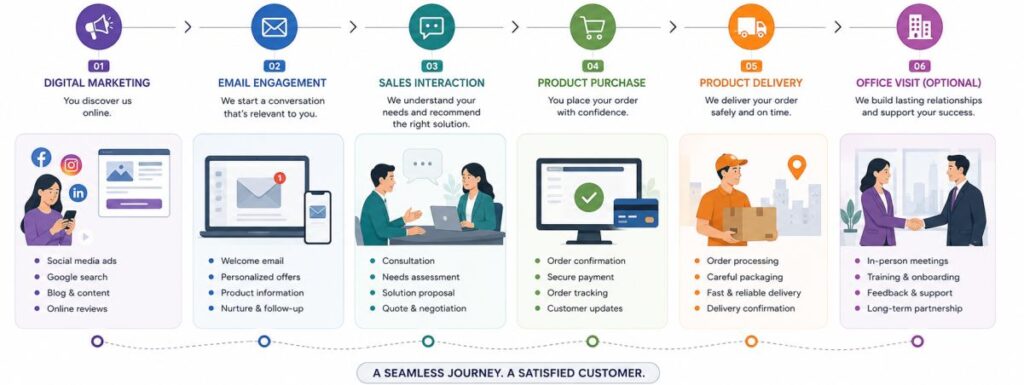
One Customer Can Experience Your Entire Brand in a Single Day
Imagine a customer discovering a business online.
9:00 a.m.
They see a well-produced social media campaign.
9:15 a.m.
They visit the website and decide to make an enquiry.
10:00 a.m.
A salesperson sends a proposal.
2:00 p.m.
They receive a follow-up email.
Three days later
Their order arrives in carefully presented packaging.
A week later
They visit the company’s office for a meeting.
Different people were responsible for each interaction.
But the customer experienced one continuous story.
Was the business easy to understand?
Did it feel professional?
Did the quality remain consistent?
Did the experience match what the marketing promised?
Those are the questions the customer carries forward.
Every Department Leaves a Brand Impression
Branding is often assigned to marketing.
But the customer’s experience of the brand doesn’t stop there.
Marketing creates the expectation.
Your campaigns, social media and communication introduce the business and shape what customers expect.
Sales reinforces or weakens it.
The way a salesperson communicates can either confirm the promise or create doubt.
Operations proves it.
The delivery, production and fulfilment process show whether the business can actually deliver what it promised.
Customer service humanises it.
A problem is inevitable in business. How the company responds can become one of its strongest or weakest, brand moments.
The physical environment reinforces it.
Packaging, printed materials, uniforms, signage and the workspace all turn an abstract brand into something people can physically experience.
None of these departments owns the entire brand.
Together, they create it.

The Handoff Is Where Many Brands Break
One of the most overlooked moments in a customer journey happens between departments.
Marketing hands the lead to sales.
Sales hands the order to operations.
Operations hands the completed product to logistics.
Customer service takes over when something goes wrong.
Every handoff is an opportunity for information to be lost.
A promise can change.
A specification can be misunderstood.
An outdated document can be used.
A customer’s expectation can become disconnected from what they eventually receive.
The customer doesn’t see the handoff.
They only experience the result.
That is why strong brands don’t only manage individual touchpoints.
They manage the connections between them.
Your Website, Packaging and Workspace Are Having the Same Conversation
A website is not just a website.
It sets expectations.
Packaging isn’t simply packaging.
It is part of the delivery experience.
A workspace isn’t just an office.
It becomes part of how visitors and employees experience the company.
Corporate merchandise isn’t simply promotional material.
It can become something customers or employees carry into their everyday lives.
Each touchpoint has a different function.
But they should still feel like they belong to the same organisation.
That doesn’t mean everything needs to look identical.
It means the same standards, personality and promises should be recognisable across the experience.
This Is Where Growth Makes Things Harder
A small business may be able to keep everything in one person’s head.
As the company grows, that becomes impossible.
New employees join.
New suppliers are introduced.
New branches open.
More materials are produced.
Different teams manage different channels.
The business gains more touchpoints and therefore more opportunities for the customer experience to become fragmented.
Growth doesn’t just make a business bigger.
It makes the brand harder to coordinate.
That is why businesses eventually need systems, shared standards and better coordination across the brand experience.
The Customer Remembers the Whole, Not the Parts
A customer may remember that your website was easy to use.
They may remember that your team was helpful.
They may remember how professionally your product arrived.
They may remember the office.
They may remember the packaging.
But they rarely separate those experiences into departments.
They simply decide:
“I trust this company.”
Or:
“I don’t think I’ll use them again.”
That is the power and the responsibility, of a brand ecosystem.
Every department may be doing its own job.
But the customer experiences the result as one whole.
What an Integrated Brand Experience Actually Means
An integrated brand does not mean one team must control everything.
It means the business understands that its customer-facing functions are connected.
Marketing knows what sales is promising.
Sales understands what operations can deliver.
Operations understands the standards the brand represents.
Customer service knows the experience the company wants customers to have.
Physical brand assets reflect the same identity as digital ones.
Everyone has a role.
But everyone is contributing to the same picture.
Where Branda Fits Into the Bigger Picture
This is also why Branda’s ecosystem goes beyond a single branding service.
A business may need a website.
Then printed materials.
Then corporate merchandise.
Then packaging.
Then workspace branding.
Then corporate gifts.
These are different requirements, but they can all contribute to the same customer experience.
Branda brings services across these physical, digital and environmental touchpoints together so businesses can approach them as connected parts of one brand rather than isolated projects.
The goal isn’t simply to produce more branded materials.
It’s to make the pieces work together.
Final Thought
Your customer will never see your organisational chart.
They won’t know which department designed the campaign, who approved the packaging, who ordered the merchandise or who managed the office.
They will only know what it felt like to deal with your business.
That means every interaction is part of the same story.
The website.
The conversation.
The delivery.
The packaging.
The office.
The follow-up.
The gift.
The service.
Your departments may be separate. Your customer’s experience isn’t.
And when every part of the business contributes to the same picture, a brand stops feeling like a collection of disconnected activities.
It starts feeling like one company.
Build the Whole Picture
A strong brand is experienced across many touchpoints. Branda brings together services across digital, physical and environmental branding to help businesses create connected experiences that customers can recognise, trust and remember.
Because your business may have many departments. Your customer should experience one brand.
