


₦0
Your Brand Is Bigger Than the Team You See
When people think about branding, they usually think about the visible parts.
The logo.
The website.
The social media pages.
The packaging.
The merchandise.
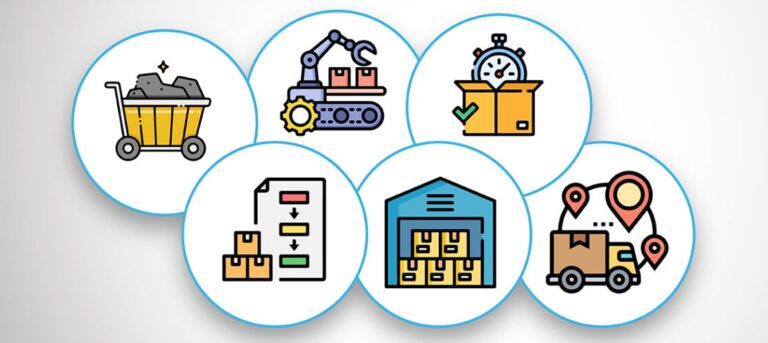
But behind many of those things is a network of people and businesses making them possible.
A designer creates the artwork.
A printer produces the materials.
A manufacturer makes the merchandise.
A packaging supplier provides the boxes.
A logistics company moves the finished products.
Someone coordinates quantities, deadlines, specifications and delivery.
The customer may never see any of these people.
But they experience the result.
Your brand has a supply chain.
And knowing how that chain works can change how you approach branding.
A “Simple” Branded Product Usually Isn’t That Simple
Consider something as straightforward as a branded company shirt.
It sounds simple:
Design a logo. Print it on shirts. Done.
But the actual process may involve:
- Choosing the right garment
- Determining sizes and quantities
- Sourcing the shirts
- Selecting the appropriate branding method
- Preparing the artwork
- Coordinating production
- Managing timelines
- Checking the finished order
- Packaging the shirts
- Getting them to the right people
Multiply that by hundreds of employees, several locations or a major event, and suddenly a simple merchandise order becomes a project that requires coordination.
The same applies to corporate gifts, packaging, printed materials, signage and promotional products.
The visible item is only the final link in a much longer chain.
Every Supplier Becomes Part of Your Brand
Here’s something businesses don’t always consider:
Your customer doesn’t know who produced your branded materials.
They don’t know which printer you used.
They don’t know where the packaging was sourced.
They don’t know which manufacturer produced the merchandise.
They only know your business gave it to them.
That means every supplier involved in a physical brand touchpoint indirectly becomes part of the customer’s experience of your company.
If something arrives late, the customer sees your company.
If packaging is poorly handled, your company gets the impression.
If the wrong quantity arrives, your company has to explain it.
The supplier may have made the mistake.
But the brand carries the consequence.
The More Suppliers You Add, the More Coordination You Need
Using multiple specialists isn’t necessarily a bad thing.
Sometimes it is exactly what a project requires.
The challenge is coordination.
One supplier may have a different timeline from another.
A packaging order may depend on the final product dimensions.
A corporate gift campaign may involve multiple product categories.
A company launching an event may need printed materials, merchandise, signage and gifts at the same time.
Now someone has to make sure that:
everything is ordered, produced, finished and delivered at the right time.
The more moving parts a project has, the more important coordination becomes.
Scale Changes Everything
A small order can be relatively easy to manage.
Twenty branded notebooks?
Manageable.
But what happens when you need:
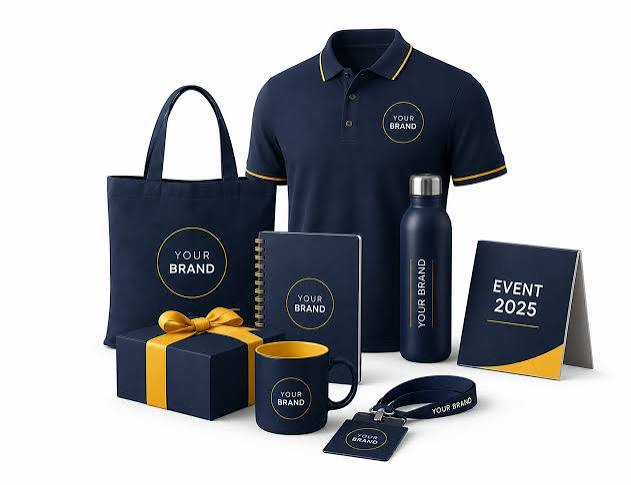
500 employee kits?
1,000 event giveaways?
Multiple corporate gift packages?
Branded materials delivered to several locations?
The challenge is no longer simply finding a product.
It’s managing consistency at scale.
The same specifications need to be communicated across production.
Quantities need to be accurate.
Timelines need to align.
Deliveries need to be coordinated.
And someone needs to remain responsible for the bigger picture.
This is where branding starts looking less like a creative project and more like business infrastructure.
Your Brand Touchpoints Are Connected
One of the biggest advantages of thinking about branding as a supply chain is recognising that physical touchpoints don’t exist independently.
A company may launch a new identity.
That identity might need to appear on:
Business cards → Packaging → Merchandise → Corporate gifts → Signage → Office materials
Each item may have a different supplier, material and production process.
But the customer should still experience one brand.
That means businesses need to think beyond individual orders.
The real question is: “How do all these physical touchpoints work together?”
The Hidden Cost of Fragmentation
There is another reason this matters.
When every branding requirement is handled separately, the business may spend more time coordinating than creating.
One person is calling the printer.
Another is speaking to a merchandise supplier.
Someone else is arranging packaging.
Another person is managing delivery.
Marketing is checking artwork.
Operations is tracking quantities.
Suddenly, a simple branding project has become a collection of separate conversations.
The cost isn’t only financial.
It’s also time, communication and management attention.
This Is Where an Integrated Approach Becomes Valuable
An integrated branding partner can reduce some of that complexity by bringing related services and execution under one roof.
Instead of treating printing, merchandise, packaging, corporate gifting and other physical brand requirements as completely separate activities, they can be planned as parts of the same brand system.
This is one of the principles behind Branda’s approach.
Its services span areas including custom merchandise, printing, packaging, corporate gifting, manufacturing and other brand-related execution, allowing businesses to coordinate multiple physical branding needs through one partner.
The benefit isn’t simply convenience.
It’s coordination.
When different pieces of the same brand are being created at the same time, having them connected can make the overall process easier to manage.
Think About the Chain Before You Place the Order
Before starting your next physical branding project, ask:
Who needs to be involved?
What depends on what?
What needs to happen first?
Where could delays occur?
Who is responsible for coordinating everything?
How will the final products reach the people who need them?
These questions may not sound like traditional branding questions.
But they can determine whether a branding project runs smoothly or becomes a last-minute scramble.
Your Brand Is Experienced at the End of the Chain
The customer doesn’t experience your supplier network.
They experience the final result.
They see the package.
They receive the gift.
They wear the shirt.
They enter the branded space.
They pick up the printed material.
They use the product.
That final interaction is where everything behind the scenes becomes visible.
Which means the supply chain isn’t separate from your brand.
It is one of the systems that delivers your brand to the world.
Final Thought
Your brand may have started with a strategy and a design.
But once that brand enters the physical world, it depends on much more.
People.
Suppliers.
Materials.
Manufacturers.
Printers.
Packaging.
Logistics.
Coordination.
And every one of those moving parts can influence the experience that eventually reaches your customer.
So the next time you order something as simple as branded merchandise, don’t just ask:
“Who can make this?”
Ask:
“Who can help us deliver the entire experience?”
Because your brand isn’t only what you design.
It’s everything that has to work together to bring that design to life.
Building the Brand Beyond the Brief
Branda brings multiple physical branding needs, including printing, merchandise, packaging, corporate gifting and custom manufacturing, together under one roof.
One brand. Multiple touchpoints. One connected approach.