


₦0
When Should You Choose Custom Manufacturing Instead of a Ready-Made Product?
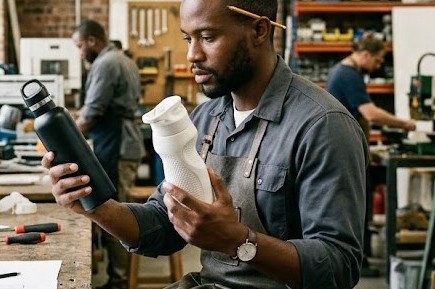
When a business needs a branded product, the first question is often:
“What can we put our logo on?”
A bottle. A bag. A notebook. A shirt. A box.
The options seem endless, and choosing one can feel straightforward.
But sometimes the product that is easiest to brand is not the product that best serves the business.
Perhaps the item needs a specific size. Perhaps it must survive repeated use in a demanding environment. Perhaps standard options do not fit the way the business operates. Or perhaps the business has a particular product in mind that cannot simply be purchased and branded.
That is when another question becomes important:
Should you customise an existing product, or manufacture something specifically for your needs?
The answer is not always custom manufacturing. It depends on what the product needs to accomplish.
A Ready-Made Product Is Not Automatically the Wrong Choice
Standard products have a place.
When an existing item meets your requirements, customising it may be the more practical decision.
You may need branded notebooks for an internal training session, bags for an event or shirts for a campaign. If standard options already meet your requirements, manufacturing an entirely new product could introduce unnecessary complexity.
A ready-made product may be suitable when:
-
The available design already serves its intended purpose.
-
You need a relatively straightforward product.
-
You want to customise its appearance rather than its underlying construction.
-
Your budget, quantity or deadline makes an existing option more practical.
The objective is not to manufacture something unique simply because you can.
It is to choose a product that fits the job.
When Does Custom Manufacturing Make More Sense?
Custom manufacturing becomes worth considering when standard products cannot meet an important requirement.
Perhaps the product needs a particular shape, size or combination of features.
Perhaps the materials need to suit a specific environment.
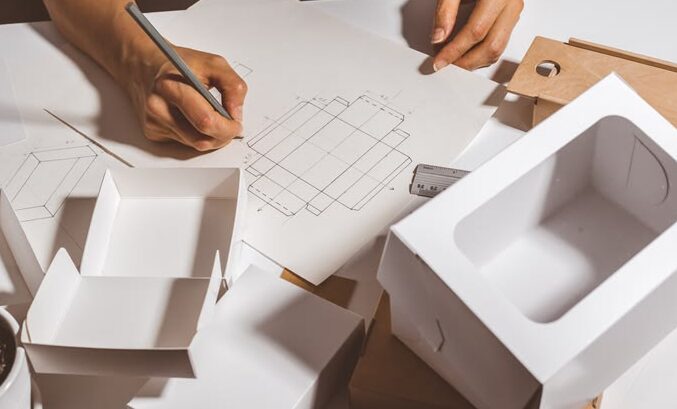
Perhaps the packaging must accommodate a product with unusual dimensions.
Or perhaps the business needs a solution that cannot be achieved by simply adding a logo to an existing item.
Consider a company preparing welcome kits for new employees. A standard gift box might work perfectly well for a few items. But if the business needs a particular internal arrangement, specific dimensions and a distinctive opening experience, a custom solution may be more appropriate.
The decision should come from the requirement, not the desire to make something look different.
The Five Questions to Ask Before Choosing
1. What must the product actually do?
Start with its purpose.
Will it be used every day? Distributed at an event? Shipped over long distances? Used by employees in a particular working environment?
The intended use determines what matters most.
2. Does an existing product meet the requirements?
Look beyond appearance.
Consider dimensions, materials, durability, functionality and how the product will be used.
If a standard option meets those requirements, custom manufacturing may not be necessary.
3. How many do you need?
Quantity matters because custom projects may involve setup expenses, minimum production quantities or other costs that are less attractive for a small run.
Compare the total costs of suitable alternatives rather than looking only at the price of one item.
4. What is the full timeline?
A custom product may require design development, material selection, prototyping, approval and production.
If the deadline is close, an existing product may be the better choice.
Do not assume that a bespoke product can be created within the same timeframe as an off-the-shelf option.
5. Will the product remain suitable as your needs change?
Think about future orders.
Will you need the same item again? Could the design accommodate additional requirements? Would changes to the specifications make future production more complicated?
A decision that works for one small order may not necessarily be the best long-term choice.
Test the Idea Before Committing to the Full Quantity
A product can look convincing in a design presentation and still disappoint in practice.
The proportions may feel wrong. The material may not behave as expected. The product may be awkward to use, transport or store.
Where sampling or prototyping is available, use it to assess the product before committing to a larger order.
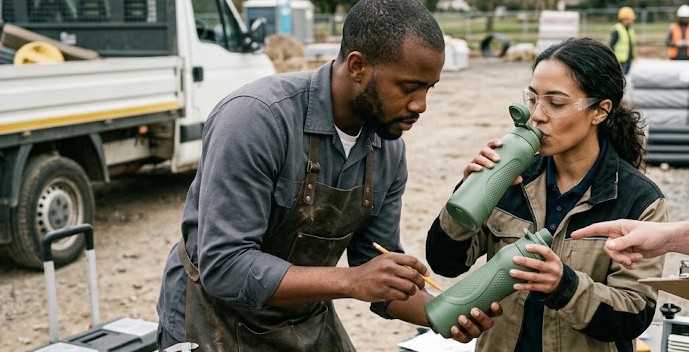
Test it in the environment where it will actually be used. Check the finish, functionality, durability and overall suitability. Confirm that the specifications match the original brief.
This is particularly important when the product has a practical role beyond carrying a brand identity.
A successful custom product must work as a product before it can work as a branding asset.
Custom Is a Means, Not the Goal
Businesses sometimes associate custom manufacturing with exclusivity or premium quality.
But a custom product is not automatically better simply because it is unique.
A poorly considered bespoke product can be more expensive and less useful than a well-selected standard item.
The more important question is whether the result meets the requirements.
That requires a clear brief, realistic specifications, an understanding of quantities and timelines, and an honest comparison of available options.
At Branda, we help businesses explore physical branding solutions, from branded merchandise and apparel to packaging and custom-manufactured products. The starting point should always be what the product needs to achieve.
Ready to Turn Your Product Idea Into Something Real?
Explore Branda to discover our printing, merchandise and custom manufacturing solutions. Whether you need to customise an existing product or explore a bespoke option, start with the requirements, and build from there.
VISIT BRANDA – https://branda.com.ng/
Because the best product is not necessarily the most customised one. It is the one that works best for the job.
