

₦0
From Blank Walls to Branded Spaces: How Workspace Design Shapes Brand Perception
Imagine walking into an office for the first time. The reception area is organised, the company logo is clearly displayed, the colours are consistent, and the furniture and wall designs complement the business’s identity.
Now imagine entering another office where the space feels disconnected, the signage is difficult to find, and nothing communicates what the business represents.
Before speaking to anyone, you may already have formed an impression of both companies.
This is one reason workspace design matters. The physical environment in which a business operates can influence how customers, visitors, employees, and business partners perceive the organisation.
A workspace is more than a place where people work. It can communicate professionalism, reinforce brand identity, support daily activities, and contribute to the experience people have when interacting with a business.
For businesses looking to strengthen their presence, workspace branding offers an opportunity to turn ordinary offices into spaces that reflect their values and purpose.
In this article, we’ll explore how workspace design shapes brand perception, the elements of an effective branded environment, and practical ways businesses can create spaces that look professional while remaining functional.
What Is Workspace Branding?
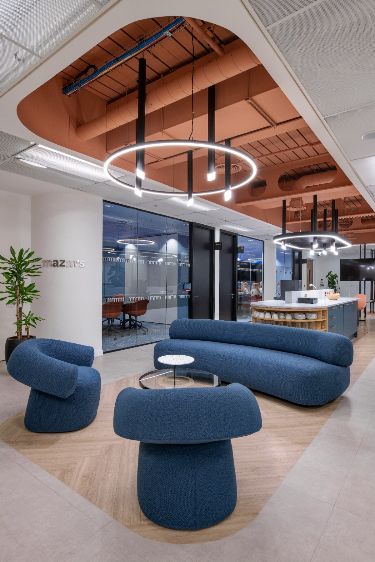
Workspace branding is the process of incorporating a company’s identity into its physical environment.
It involves using visual elements, design features, signage, materials, and spatial arrangements to create an environment that reflects the organisation’s brand.
Depending on the business, workspace branding may include:
- Branded reception areas.
- Company logos and wall graphics.
- Interior and exterior signage.
- Brand colours incorporated into selected spaces.
- Meeting room graphics and displays.
- Branded office stationery and presentation materials.
- Directional signs and wayfinding.
- Custom displays that communicate company values or history.
- Selected furniture, finishes, and decorative elements that support the brand identity.
Workspace branding is not simply about placing a logo on every available wall. It is about creating a coherent environment that communicates the right message while supporting the people who use the space.
A well-branded workspace should look intentional, reflect the organisation’s identity, and remain practical for everyday operations.
6 Ways Workspace Design Shapes Brand Perception
1. It Influences First Impressions
For businesses that receive clients, customers, suppliers, or other visitors, the office environment can become part of the first impression.
A clearly identified entrance, organised reception area, readable signage, and consistent visual identity can help visitors understand where they are and what to expect.
By contrast, confusing navigation, neglected displays, or inconsistent presentation may make the space feel less organised.
This does not mean that every company needs a luxurious office. A modest workspace can still communicate professionalism through cleanliness, thoughtful organisation, and appropriate branding.
How to apply this: Begin with the areas visitors encounter first. Ensure that your entrance, reception area, company identification, and visitor directions are clear and consistent with your brand.
2. It Reinforces Brand Identity
Your brand identity should not exist only on your website or social media pages.
When people visit your physical premises, the environment can reinforce the same visual identity they encounter elsewhere.
For example, a company that uses a particular colour palette, typography, and visual style across its marketing materials can incorporate those elements into selected areas of its workspace.
A technology company might use clean layouts and restrained graphics, while a creative agency might incorporate more expressive artwork and visual displays.
These are not fixed rules. The right design depends on the company’s personality, audience, and operational needs.
The goal is to make the physical environment feel connected to the wider brand.
How to apply this: Develop a consistent visual approach using approved brand colours, logos, typography, and graphic elements. Apply them selectively across the workspace rather than introducing unrelated designs.
3. It Can Strengthen Customer Confidence
Customers often look for signs that a business is organised, credible, and capable of delivering what it promises.
A well-maintained and clearly branded environment can support that perception by showing attention to detail and creating a more coherent customer experience.
For example, a professional services firm might use clear reception signage, organised meeting rooms, and branded presentation materials to create an environment that supports client meetings.
However, an attractive office cannot replace genuine competence, transparent communication, or reliable service.
How to apply this: Identify the qualities you want customers to associate with your business, then consider how the environment can support those qualities. Make sure the experience inside the workspace matches the promises your brand makes.
4. It Helps Employees Connect With the Brand
Workspace branding is not only for external audiences. Employees also experience the company’s identity through their working environment.
A space that clearly communicates the organisation’s purpose, values, and personality may help employees understand how their work connects to the wider business.
For example, a company might display its mission statement in a shared area, use meeting room graphics to communicate key principles, or create an organised space where employees can collaborate.
The important point is that these elements should reflect the organisation’s actual culture rather than simply displaying aspirational statements.
How to apply this: Consult employees about how the workspace supports their work. Identify areas where clearer signage, better organisation, or more thoughtful design could improve the everyday experience.
5. It Makes Your Business Easier to Identify and Navigate
In shared office buildings, commercial complexes, industrial facilities, and large business premises, signage serves a practical purpose.
Visitors need to know where to enter, where to report, and how to find the relevant department or meeting room.
Effective signage can reduce confusion and make the customer journey smoother.
For example, an exterior sign can help visitors identify the correct building, while reception signs and directional graphics can guide them through the premises.
For businesses operating in busy commercial areas, clear identification can also make the physical location easier to recognise.
How to apply this: Review your premises from a visitor’s perspective. Check whether the entrance is easy to identify, whether important signs are visible, and whether directions are understandable without requiring constant assistance.
6. It Helps Create a Consistent Experience Across Brand Touchpoints
Customers may interact with your business online, over the telephone, through printed materials, and in person.
When these experiences feel disconnected, the brand may appear inconsistent.
For example, a business may have a polished website but an office environment that uses unrelated colours, outdated signage, and inconsistent messaging.
Although customers will not always notice every design detail, maintaining a consistent identity can help connect the different ways they encounter the business.
How to apply this: Review your workspace alongside your website, marketing materials, company documents, packaging, and other brand assets. Look for visual or messaging inconsistencies that could be addressed.
Essential Elements of an Effectively Branded Workspace
Creating a branded environment does not require redesigning an entire office. Several key elements can make a meaningful difference when they are planned carefully.
1. Reception and Entrance Branding
The entrance is often the first physical point of contact between your business and its visitors.
Consider how your logo, company name, reception desk, wall finishes, and visitor information work together.
The design should make the business easy to identify without overwhelming the space.
For smaller offices, a well-positioned logo, clean reception area, and clear signage may be sufficient.
For larger premises, more extensive entrance branding may be appropriate.
2. Branded Walls and Graphics
Wall graphics can communicate a company’s identity, values, services, history, or areas of expertise.
Options may include:
- Logo displays.
- Brand-colour panels.
- Company timelines.
- Mission and vision statements.
- Product or service displays.
- Custom illustrations.
- Decorative graphics that reflect the brand’s personality.
The most effective displays have a clear purpose.
Avoid covering every wall with text or decorative elements. Allow enough visual space for important information to stand out.
3. Office and Exterior Signage
Signage helps people identify a business and navigate its environment.
Depending on the premises, it may include exterior identification signs, reception signs, directional signs, department labels, meeting room signs, and safety information.
When planning signage, consider visibility, viewing distance, lighting, readability, placement, and the conditions in which the sign will be installed.
Exterior signage may also require landlord approval or compliance with local planning and signage regulations. Check the applicable requirements before production and installation.
4. Consistent Colours and Typography
Brand colours and typography help connect physical spaces with the company’s wider visual identity.
These elements can appear in wall graphics, signs, selected furnishings, displays, and other details.
Consistency matters more than using every brand colour everywhere.
A limited and carefully applied palette can create a more cohesive environment than introducing multiple competing colours and patterns.
5. Functional Layout and Furniture
Branding should work alongside the practical requirements of the workspace.
Furniture placement, circulation routes, lighting, accessibility, acoustics, and employee needs all affect how the environment functions.
For example, a reception area should provide enough space for visitors, while meeting rooms should support productive conversations and presentations.
A visually impressive office that is uncomfortable, difficult to navigate, or unsuitable for daily work is not a successful design.
The physical environment should support the business as well as represent it.
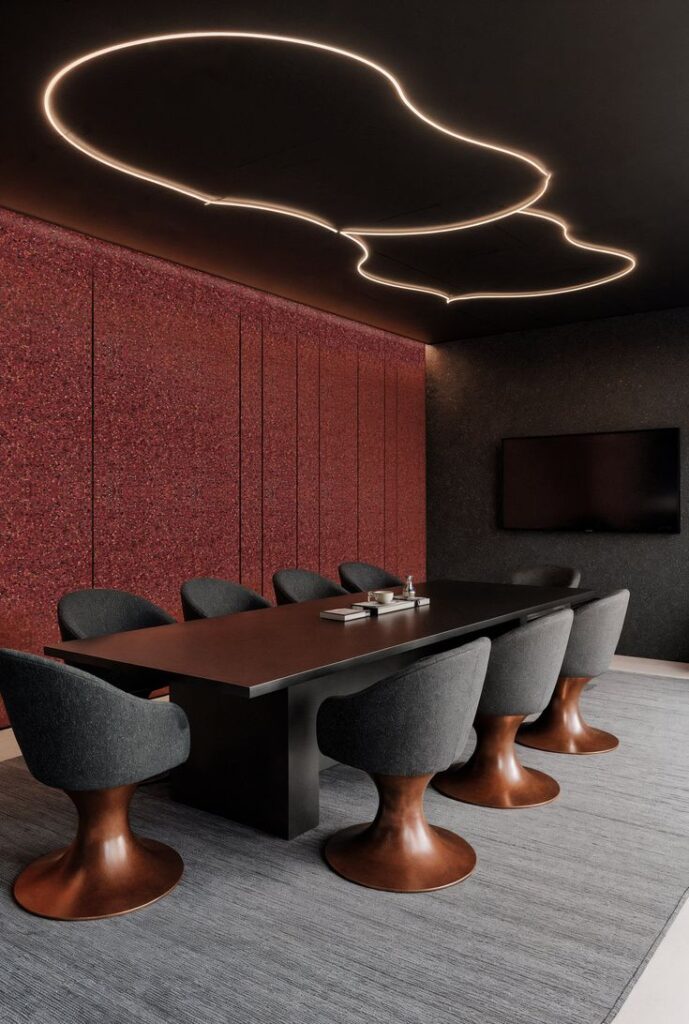
6. Meeting Rooms and Collaborative Areas
Meeting rooms are important spaces for client discussions, presentations, interviews, and internal collaboration.
A consistent visual identity can help these spaces feel connected to the organisation.
Consider restrained wall graphics, appropriate signage, branded presentation materials, and practical display arrangements.
Where employees need to focus or collaborate, prioritise comfort, usability, and the purpose of the room over decorative features.
Workspace Branding Ideas for Different Types of Businesses
The right approach to workspace branding depends on the business, the space available, and the people who use it.
Corporate Offices
Corporate offices may benefit from professional reception branding, consistent directional signs, branded meeting rooms, and carefully selected wall graphics.
The aim is to create a cohesive environment that supports client interactions and everyday work.
Retail Businesses
Retail environments need to communicate the brand while helping customers find products and complete purchases.
Useful elements may include exterior signage, branded display areas, product information, promotional graphics, and clear directional signs.
The layout should make the shopping experience straightforward rather than prioritising decoration at the expense of usability.
Startups and Small Businesses
Smaller businesses do not need to spend heavily to establish a branded workspace.
They can begin with a clearly displayed logo, consistent colours, simple signage, and a tidy, well-organised environment.
As the business grows, additional elements can be introduced according to customer needs and budget.
Creative Agencies
Creative businesses may use artwork, expressive wall graphics, project displays, and selected colour accents to communicate their personality.
However, the space should still support concentration, meetings, and collaboration.
Creative design is most effective when it has a purpose rather than becoming visual clutter.
Manufacturing and Industrial Businesses
Industrial premises may require clear identification signs, safety information, directional signage, and branded areas for visitors or administrative operations.
In these environments, durability, visibility, safety, and compliance are particularly important.
Branding should never obstruct essential safety information or interfere with operational requirements.
How to Plan a Workspace Branding Project
Before investing in a branded environment, take time to understand your objectives and requirements.
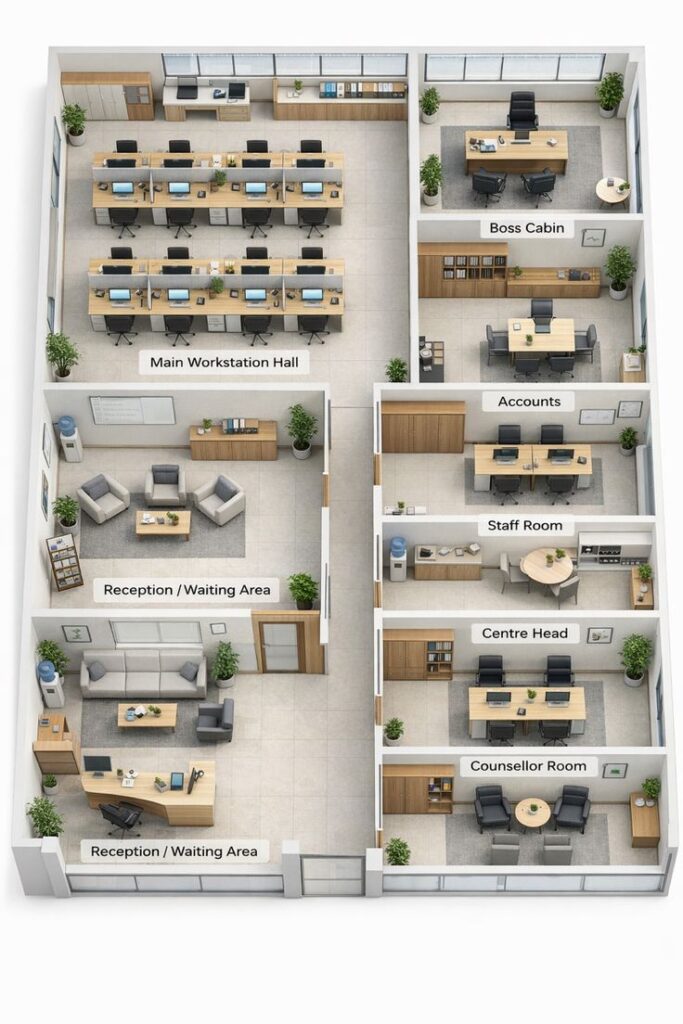
Step 1: Assess Your Existing Space
Walk through the premises and examine the areas that need improvement.
Consider the entrance, reception, meeting rooms, shared spaces, corridors, employee work areas, and exterior identification.
Take photographs and measurements where appropriate.
Identify what works well, what needs attention, and which areas are most important to your customers or employees.
Step 2: Define Your Objectives
Determine what you want the project to achieve.
Your goals might include improving brand visibility, creating a more professional reception area, helping visitors navigate the premises, or making the workspace more consistent with a new brand identity.
Clear objectives help prevent unnecessary spending on features that do not address your actual needs.
Step 3: Establish Your Budget
Workspace branding costs vary according to the size of the space, materials, design complexity, production requirements, installation needs, and project scope.
Create a budget that covers the elements you need most.
If the budget is limited, prioritise high-impact areas such as the entrance, reception, and essential signage before considering less critical decorative features.
Step 4: Prepare Your Brand Assets
Gather your approved logo files, brand colours, typography guidelines, and relevant visual assets.
If your business is undergoing a rebrand, ensure that the identity has been finalised before ordering signage or producing permanent wall graphics.
This helps reduce inconsistencies and avoidable replacement costs.
Step 5: Develop the Design and Specifications
Work through the proposed design, materials, dimensions, placement, and installation requirements.
Consider whether the materials are suitable for the environment, whether signs will be readable from the required distance, and whether the design accommodates the building’s features.
Where necessary, involve the appropriate facilities, health and safety, property management, or installation professionals.
Step 6: Review and Approve Before Production
Before production begins, confirm the final artwork, spelling, colours, dimensions, quantities, materials, and installation details.
For signs and graphics, check that the proposed placement is appropriate and that any necessary permissions have been obtained.
Written approval of the final specifications helps reduce misunderstandings and production errors.
Step 7: Maintain the Branded Environment
Workspace branding requires occasional maintenance.
Signs may fade, graphics may become damaged, and company information may change.
Review the environment periodically and update elements when necessary.
If your company changes its logo, services, or brand guidelines, assess which physical materials need updating and plan the transition carefully.
Common Workspace Branding Mistakes to Avoid
Even a well-funded project can fall short when the design is poorly planned.
Focusing only on appearance: A workspace should look professional while remaining comfortable, accessible, and functional.
Using too many visual elements: Excessive colours, slogans, graphics, and displays can overwhelm the environment.
Choosing unsuitable materials: Materials must be appropriate for the surface, exposure, traffic, and conditions in which they will be used.
Ignoring signage visibility: A sign that looks attractive up close may be difficult to read from the entrance or road.
Inconsistent branding: Using outdated logos or unrelated colour schemes can undermine the visual identity.
Overlooking employee needs: Workspace improvements should consider the people who use the space every day, not only visitors.
Failing to plan installation: Incorrect measurements, unsuitable mounting methods, or missing permissions can delay a project and increase costs.
Neglecting maintenance: Damaged or outdated signage can undermine the professional impression the original project was intended to create.

How Branda Can Support Your Workspace Branding Needs
Creating a branded workspace may involve several connected requirements, including creative design, printed graphics, signage, and other branded materials.
Branda brings together five ecosystems: Gifts, Studio, Create, Prints, and Digital by Branda.
These ecosystems represent different areas of branding-related support, allowing businesses to explore solutions that align with their identity and project objectives.
For a workspace branding project, you may need to discuss requirements such as:
- Company logo displays and wall graphics.
- Office identification and directional signage.
- Exterior signs and light boards.
- Printed branding materials.
- Creative assets for the physical environment.
- Related digital materials that maintain a consistent brand identity.
The exact requirements will depend on your premises, project scope, and preferred specifications.
Before requesting a quote, prepare your company logo or artwork, measurements, photographs of the space, required quantities, installation location, preferred completion date, and budget.
For exterior signage, include the installation address and any relevant dimensions or site requirements.
Providing these details can help clarify the scope of the project and support a more informed discussion about suitable options.
Ready to transform your workspace into a more cohesive branded environment? Contact Branda to discuss your project and Request a Custom Quote.
Conclusion
Workspace design can influence how customers, employees, and visitors experience a business.
A clearly identified entrance, consistent visual identity, useful signage, and thoughtfully designed interior can help communicate professionalism while making the environment easier to navigate.
However, successful workspace branding is not about spending the most money or filling every wall with a logo. It is about creating a space that reflects the organization’s identity and supports the people who use it.
Start by identifying the areas that matter most, defining your objectives, and choosing design elements that balance visual appeal with practical needs.
Whether you’re branding a small office, refreshing a reception area, or planning a larger commercial space, a considered approach can help create a more consistent experience.
Your workspace is part of your brand. Make sure it tells the right story.
On A Final Note
Ready to shop?
Order all branding services from this article and more on Branda, delivered to you.
Shop on Branda →Ready for bulk or special orders?
Find everything from our articles and make unique purchases in bulk and more.
Contact us →