


₦0
A Good Sign Does More Than Display Your Business Name. It Helps People Find Their Way.
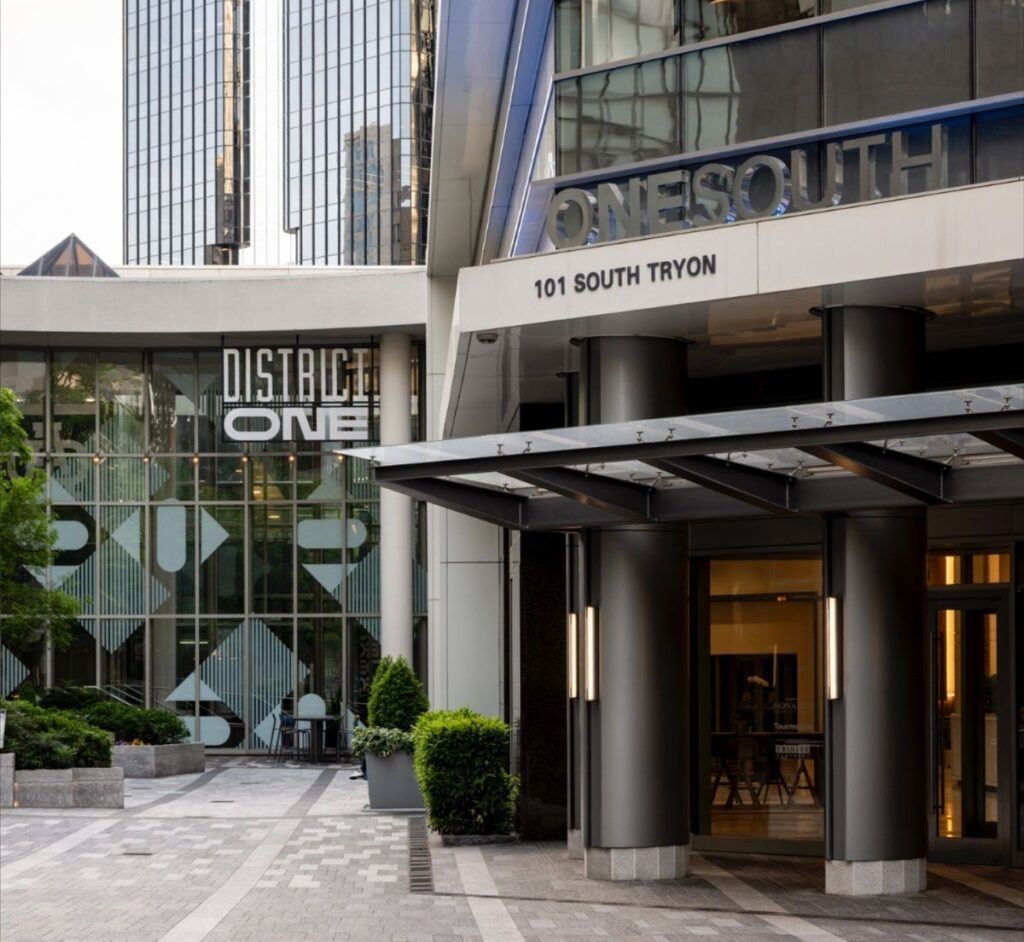
Imagine arriving at a business for the first time.
You have the address, but when you get there, you’re unsure which entrance to use. There is no clear sign identifying the building, and once inside, you cannot tell where reception is or which direction leads to the office you need.
You may have found the business, but getting to the right place has become unnecessarily difficult.
This is where signage matters.
For many businesses, signs are treated as finishing touches: something to display a company name, decorate a wall or make an entrance look more professional.
But effective signage does much more.
It helps people identify a business, understand its environment, locate important areas and move through a space with greater confidence.
Whether it’s a storefront, corporate office, showroom, hotel, restaurant or commercial building, the signs around a business influence how people experience the space.
A good sign doesn’t just tell people where they are. It helps them understand where to go next.
Here are six things businesses should consider when planning their signage.
1. Make Your Business Easy to Identify
The first job of business signage is recognition.
Someone approaching your building should be able to identify the business without having to guess.
This is particularly important for businesses operating from shared commercial buildings, office complexes, shopping centres or locations where several organisations occupy the same property.
Your main entrance signage should communicate the business name clearly and make it easy to recognise from an appropriate viewing distance.
Consider:
-
Visibility: Can people see the sign when approaching the building?
-
Readability: Is the lettering clear enough to read?
-
Placement: Is the sign positioned where visitors naturally look?
-
Brand identity: Does the design reflect the business’s established visual identity?
A sign does not need to be oversized or overly decorative to be effective.
It needs to communicate the right information clearly and suit the environment in which it appears.
2. Help Visitors Navigate the Space
Identifying a business is only the beginning.
Once customers, visitors or employees enter the building, they may still need help finding their destination.
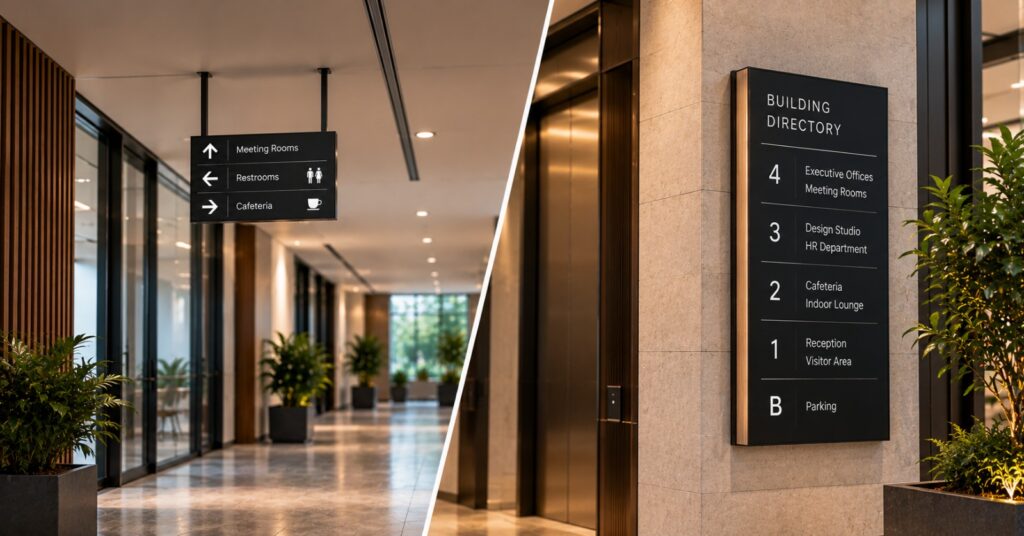
This is where directional and wayfinding signage becomes important.
Think about the different areas within a typical commercial environment:
-
Reception and waiting areas.
-
Meeting and conference rooms.
-
Offices and departments.
-
Restrooms.
-
Elevators and staircases.
-
Customer service points.
-
Restricted or staff-only areas.
Without clear directions, visitors may have to ask employees for assistance at every turn.
A well-planned signage system helps reduce that uncertainty.
For larger buildings, this may involve directional signs at key junctions, room identification signs, floor directories and clear labels for important facilities.
The important thing is to think about the journey from the visitor’s perspective.
Where will someone first need direction? Which areas might be difficult to locate? What information would make moving through the building easier?
Good wayfinding begins with understanding how people use the space.
3. Make Your Signage Part of Your Brand Identity
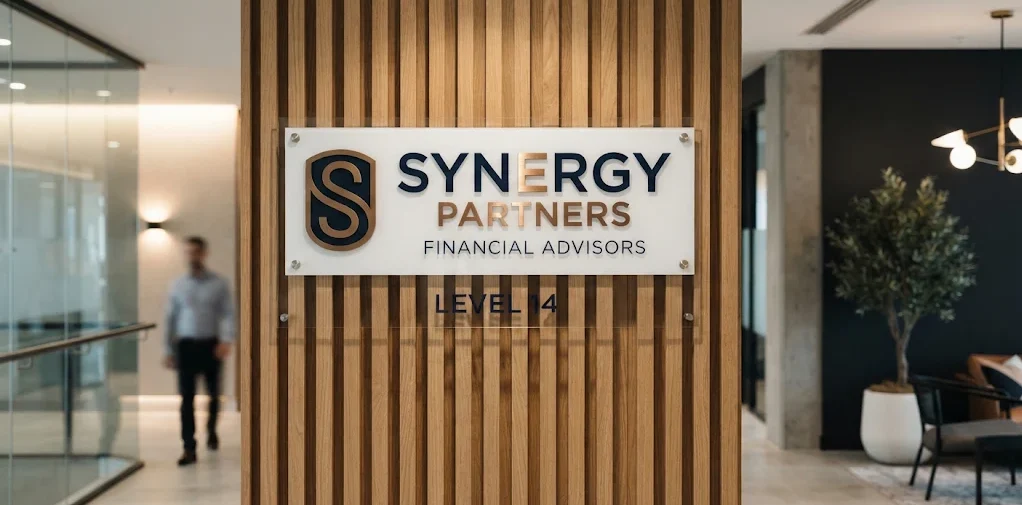
Your business signage is also a branding opportunity.
It is often one of the first physical expressions of your company’s identity that customers encounter.
Consider how different the same business can appear depending on how its signage is designed.
A premium hospitality brand may require a more refined and understated presentation. A children’s learning centre may need friendly, easily recognisable visual elements. A corporate office may benefit from a clean and professional signage system.
The design should reflect the character of the business while remaining functional.
Pay attention to:
-
Typography and legibility.
-
Brand colours and visual identity.
-
Materials and finishes.
-
Sign dimensions and proportions.
-
How the sign relates to the surrounding architecture.
Consistency matters too.
If your entrance sign looks completely different from the directional signs inside your building, the overall environment may feel disconnected.
Your signage should feel like part of the same brand, not a collection of unrelated signs installed at different times.
4. Choose Materials That Suit the Environment
A sign may look excellent when newly installed, but its effectiveness also depends on how well it performs in its intended location.
An outdoor sign is exposed to different conditions from one installed inside an air-conditioned reception area.
Sunlight, rain, dust, humidity, frequent handling and general wear can affect how different materials look and perform over time.
This makes material selection an important part of the planning process.
Before deciding on a finish or material, consider:
Location: Will the sign be used indoors or outdoors?
Exposure: Will it be exposed to direct sunlight, rain or other environmental conditions?
Visibility: Does the material support the level of contrast and readability required?
Maintenance: How easy will it be to clean, maintain or replace?
Durability: Is the material suitable for how frequently the sign will be used or exposed to the environment?
The most expensive material is not automatically the best choice.
The right option is one that suits the purpose, location, design and expected lifespan of the sign.
5. Don’t Sacrifice Readability for Creativity
Creative signage can make a business environment more memorable.
But a sign that looks attractive and is difficult to understand has missed an important part of its purpose.
Decorative fonts, excessive wording, low colour contrast and overcrowded layouts can make information difficult to read.
This is particularly important for directional signs, safety notices, room labels and other signs that people need to understand quickly.
Before approving a design, ask:
-
Can someone understand the message at a glance?
-
Is the lettering large enough for the intended viewing distance?
-
Is there enough contrast between the text and background?
-
Is the information arranged in a logical order?
-
Are symbols and icons easy to recognise?
Where appropriate, use clear wording, familiar symbols and readable typography.
Also consider people with different accessibility needs. Important signs may require suitable contrast, accessible placement, tactile information or other features depending on the environment and applicable standards.
The goal is not to remove creativity from signage.
It is to make sure the creative decisions support the information the sign is meant to communicate.
6. Review Your Signage as Your Business Changes
A business environment is rarely permanent.
Departments move. Offices expand. New services are introduced. Meeting rooms are renamed, and reception areas are redesigned.
But signage does not always change at the same pace.
This can leave visitors relying on outdated directions or encountering information that no longer reflects how the business operates.
Make signage reviews part of your regular business-environment checks.
Look out for:
-
Signs displaying outdated business names or information.
-
Directional signs pointing to relocated departments.
-
Damaged, faded or poorly maintained signs.
-
Areas where visitors regularly need assistance finding their way.
-
New spaces that need identification or directions.
A signage update does not always require a complete redesign.
Sometimes, replacing outdated information, improving placement or introducing a few additional directional signs is enough to make the environment easier to navigate.
What matters is ensuring that the signs continue to serve the people using the space.
A Sign Is Part of the Experience Your Business Creates
People interact with business environments in different ways.
Some arrive for a meeting. Others visit to make a purchase, attend an event, collect an order or speak with a member of staff.
Whatever brings them there, they need to understand the space around them.
Effective signage makes that easier.
It identifies your business, communicates important information, supports navigation and reinforces your visual identity.
So, when planning your next office renovation, storefront update or commercial space, don’t think of signage as something to add at the end.
Think about how people will experience the space and what information they will need along the way.
Because a well-designed sign does more than look good on a wall. It helps people move, understand and engage with your business.
Where Branda Fits
Creating effective business signage requires more than choosing a design and putting a name on a board.
It involves understanding the environment, identifying what information people need, selecting suitable materials and ensuring the final presentation reflects the business’s identity.
Through its printing, creative design and Studio solutions, Branda helps businesses bring their brand presentation into their physical environments.
From business signage and printed materials to workspace design and other branded touchpoints, the goal is to create spaces and materials that communicate clearly and represent the business professionally.
Give Your Business Space a Clearer Identity
Whether you’re setting up a new office, refreshing a commercial environment or improving how visitors navigate your space, the right signage can make a meaningful difference.
Explore Branda’s printing, design and Studio solutions.
Make your space recognisable. Make every direction count.
On A Final Note
Ready to shop?
Order all branding services from this article and more on Branda, delivered to you.
Shop on Branda →Ready for bulk or special orders?
Find everything from our articles and make unique purchases in bulk and more.
Contact us →