


₦0
Your Brand Can Say Anything. What Can It Prove?

A brand can call itself premium.
Innovative. Reliable. Customer-focused. Bold. World-class.
Your website can say it. Your social media can repeat it. Your adverts can make it sound convincing.
But there is a point where words stop doing the work.
Because eventually, someone experiences the business.
They visit your website. Receive your proposal. Walk into your office. Open your packaging. Speak to your team. Use your product. Receive what they ordered.
And that is when the brand has to prove itself.
The strongest brands are not simply good at making promises. They are good at creating evidence for them.
Anyone Can Make a Brand Claim
This is one of the easiest things to overlook in branding.
A business can decide that it wants to be perceived as premium and design everything around that idea. It can choose sophisticated colours, polished photography and elegant language.
But premium positioning does not automatically create a premium experience.
A company can describe itself as customer-focused while making customers chase updates.
A business can call itself innovative while presenting its products and services in ways that feel outdated.
A company can describe itself as professional while sending poorly prepared documents, inconsistent materials or unclear communication.
The problem is not necessarily that the claim is false.
The problem is that the experience may not provide enough evidence to make the claim believable.
And that distinction matters.
A Brand Is Stronger When the Experience Backs Up the Message
Think about a simple statement:
“We care about quality.”
What proves it?
It could be the quality of the product itself. But it could also appear in the way the product is packaged, the information provided to the customer, the attention given to details or the way problems are handled.
Now consider:
“We are built for modern businesses.”
That claim needs more than a sentence on a website.
It might need a website that makes information easy to find. It might need communication that feels efficient. It might need a workspace that reflects the way the business actually operates. It might need digital tools and physical materials that feel like they belong to the same organisation.
The claim is the starting point.
The experience is the evidence.

Where Does Your Brand Actually Prove Itself?
The interesting thing about brand proof is that it rarely sits in one place.
It appears across the points where people interact with the business.
Your Website
If a business says it understands its customers, the website is one of the first places that claim gets tested.
Can people quickly understand what the company does?
Can they find the information they need?
Does the experience feel considered, or does it make the customer work too hard?
A polished website is useful. A website that makes the right information easy to understand is much more valuable.
Your Physical Materials
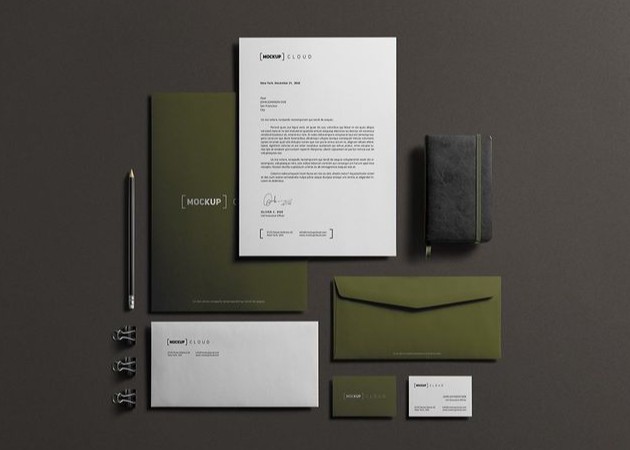
A business card, brochure, proposal, packaging or branded merchandise may seem small compared with a website or advertising campaign.
But physical materials are still moments of proof.
The choice of material, finish, structure, presentation and attention to detail can either reinforce what the brand says about itself or quietly contradict it.
When a company positions itself as meticulous, careless physical touchpoints become particularly noticeable.
Your Workspace
A company does not only communicate through what it posts online.
Its environment communicates too.
A workspace can tell employees whether collaboration is genuinely encouraged. It can tell clients how seriously the company takes their presence. It can reflect the culture a company talks about, or reveal the gap between that culture and reality.
This is why workspace design should not be reduced to making an office look impressive.
The space itself becomes part of the evidence.

The Customer Experience
Perhaps the most important proof is what happens after the customer has decided to engage.
Does the process feel clear?
Does communication make sense?
Does the business deliver what it promised?
Does the experience feel intentional from beginning to end?
This is where branding stops being presentation and becomes behaviour.
And behaviour is difficult to fake for long.
The Gap Between What You Say and What People Experience
Every brand has the potential for a gap.
You say one thing.
The customer experiences another.
Sometimes the gap is obvious.
Other times, it is small enough to be overlooked internally but noticeable to the person on the outside.
A brand may present itself as sophisticated while its customer journey feels unnecessarily complicated.
It may position itself as approachable while its communication feels distant.
It may talk about creativity while every customer-facing touchpoint feels predictable.
None of these contradictions necessarily come from bad intentions.
They often happen because different parts of the brand are being built separately.
One team is thinking about the website.
Another is thinking about marketing.
Someone else is handling print.
Someone else is working on the physical environment.
Each piece may look fine on its own.
But the customer does not experience those pieces separately.
They experience the result.
Proof Is What Makes Positioning Believable
This is why strong positioning needs more than a clever statement.
Consider the difference between:
“We create premium experiences.”
and
A business whose website, communication, physical materials, environment and customer interactions consistently make the experience feel premium.
The second does not need to repeat the word “premium” as often.
People can see it.
That is the power of proof.
And proof does something advertising cannot do on its own: it gives people a reason to believe the message.
This is also where a lot of brands have an opportunity to improve.
Instead of asking only:
“What do we want people to think about us?”
ask:
“What would people need to see, experience or receive for them to believe it?”
That question changes the work.
It moves branding from decoration into decision-making.
Stop Building Claims. Start Building Evidence.
A useful exercise for any growing business is to take its biggest brand promises and challenge them.
Write down three statements your company makes about itself.
Perhaps:
“We are innovative.”
“We deliver exceptional service.”
“We are a premium brand.”
Now ask a second question for each one:
What is the evidence?
What does a customer actually encounter that supports that statement?
Maybe the answer is strong.
Maybe there are gaps.
Maybe there are areas where the promise is much stronger than the experience.
That is valuable information.
Because the goal is not to stop making ambitious claims.
The goal is to make those claims easier to believe.
The Best Branding Leaves Evidence Everywhere
A strong brand does not depend on one perfect logo, one impressive campaign or one carefully written “About Us” page.
Its positioning keeps appearing in tangible ways.
In what people see.
In what they receive.
In how they interact with the business.
In how the company presents itself when nobody is actively trying to “market” it.
That is what makes a brand feel credible.
The brand does not have to keep asking people to believe it.
The experience keeps answering the question for them.
And perhaps that is a better way to think about branding altogether:
Not just as the story a business tells about itself, but as the evidence it leaves behind.
Because your brand can say anything.
The more important question is:
What can it prove?
Final Thought
The next time your business is preparing a campaign, redesigning its website, producing new branded materials or refreshing its workspace, do not only ask whether it looks right.
Ask whether it supports the promise you are making.
Because when the message and the experience agree, the brand becomes easier to trust, and much harder to forget.
