

₦0
When a Showroom Becomes Part of the Brand: Inside Branda’s Afrikstabel Project
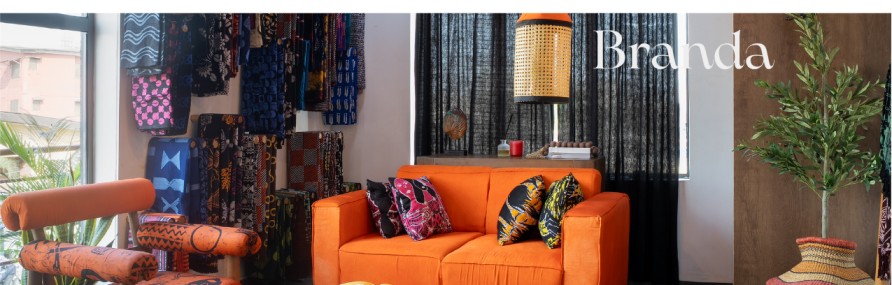
A showroom is often expected to do one thing:
Show the product.
But for a business like Afrikstabel, that wasn’t enough.
The company operates in textile manufacturing, producing textiles for local and international markets while building a reputation around African textile heritage, sustainability and the artisans behind its work.
Its showroom therefore had a bigger responsibility.
It needed to display products.
It needed to support client pickups.
It needed to provide a place for conversations and meetings.
It needed to help the team organise and manage products.
And when local and international clients walked through the space, it needed to communicate the essence of the brand.
The challenge was that the existing open space wasn’t doing all of those jobs well.
That became the opportunity for Branda.
The Problem Wasn’t the Products. It Was the Space Around Them.
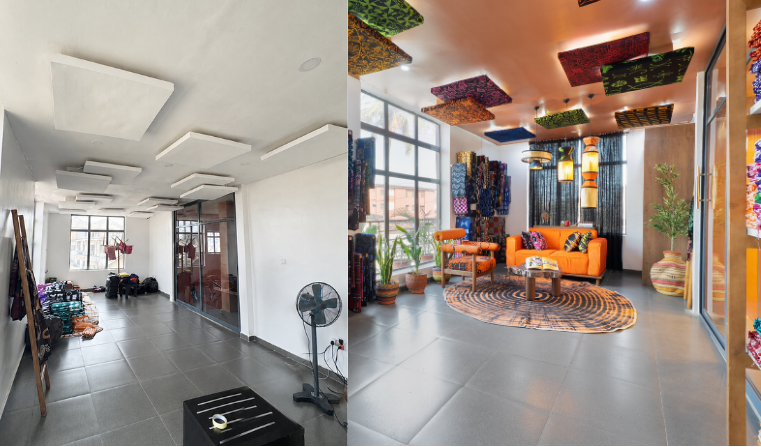
Before the transformation, the open area was being used for several purposes at once.
It served as a display area for textile samples.
It was used for client pickups.
It accommodated meetings and conversations.
But newly produced textiles were also being placed directly on the floor.
As more products came in, the space could become cluttered and difficult to navigate.
That created practical problems.
Textiles could become stained.
Finding the right products for particular clients or orders could take unnecessary time.
And the more crowded the space became, the harder it was for the showroom to provide the kind of experience expected from a major textile business.
There was another problem that was harder to measure but just as important.
The space did not reflect the stature of the brand.
A company capable of producing textiles for a global market needed an environment that could communicate that value.

The Brief: Turn an Open Space Into a Multifunctional Showroom
The objective was not simply to make the area more attractive.
Afrikstabel needed a multifunctional showroom.
One that could support both the practical and human sides of the business.
Products needed to be displayed properly.
Samples needed to be easier to organise.
Client pickups needed to happen without the space feeling chaotic.
Meetings and conversations needed to feel comfortable.
And visitors needed to feel that they were stepping into the world of Afrikstabel, not simply walking into a room where textiles were stored.
That meant the showroom had to work on two levels:
It had to work for the business.
And
it had to work for the people experiencing the brand.
Designing Around the Way the Business Actually Works
The most important question wasn’t:
“How should the showroom look?”
It was:
“What does this showroom need to help the business do?”
That shift changes how a space is approached.
Instead of treating display, meetings, storage and client interaction as unrelated activities, they become parts of the same environment.
The redesign therefore had to create a better relationship between the products, the people using the space and the people visiting it.
The showroom needed to help the team work more effectively while also making the experience more welcoming for clients.
That is what makes this project more than a visual makeover.
It is an example of design responding to business behaviour.
Making Room for the Brand Behind the Products
Afrikstabel’s identity extends beyond the textiles it manufactures.
The company places importance on Africa, Nigeria, sustainability and the artisans and creatives who contribute to the textile-making process.
For the client, those values needed to be felt within the showroom.
That matters because a brand’s values are more convincing when people can experience them rather than simply read about them.
A client sitting down for a conversation should be able to feel connected to the world behind the products.
The environment should feel recognisably African without becoming disconnected from the company’s modern, international outlook.
The showroom therefore became an opportunity to bring together product, culture and brand identity in one physical experience.

A Better Showroom Can Change More Than What Customers See
Good design has a practical side.
When products are easier to organise, teams spend less time searching.
When the environment is easier to navigate, client interactions become smoother.
When display and conversation can coexist, the space becomes more useful.
And when the environment reflects the company’s identity, customers gain a clearer understanding of the business behind the products.
In that sense, the transformation was about more than appearance.
It was about making the space more useful, more intentional and more representative of the business.
When the Physical Space Tells the Same Story as the Brand
There is a lesson here that applies far beyond textile manufacturing.
Businesses often invest heavily in how they present themselves online.
Their websites are carefully designed.
Their social media is considered.
Their marketing communicates a clear story.
But eventually, customers encounter the physical business.
They enter the office.
They see the product.
They pick up an order.
They sit down for a meeting.
And suddenly the brand has to exist in a physical environment.
That environment either reinforces the story or creates a gap.
Afrikstabel’s showroom presented an opportunity to close that gap.
The space could now do more than hold and display textiles.
It could become part of how the brand was experienced.
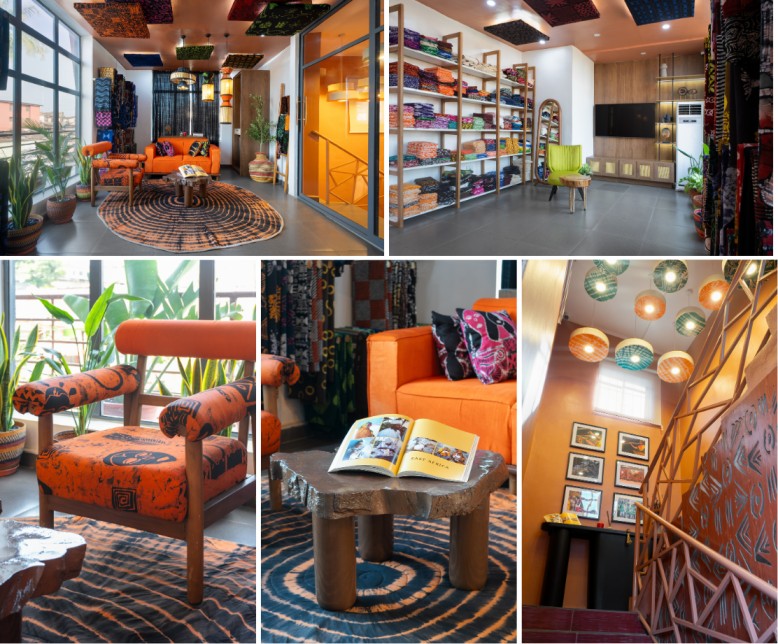
From Product Storage to Brand Experience
That is ultimately what makes the Afrikstabel project significant.
The transformation wasn’t about adding decoration to an empty room.
It was about reconsidering what the space needed to accomplish.
A better place to display products.
A more organised environment for the team.
A more welcoming setting for clients.
A physical expression of the values behind the brand.
The showroom became a meeting point between operations and experience.
And that is often where good brand environments create the most value.
What This Project Teaches Us
A showroom should not be designed only around what a business sells.
It should also be designed around:
How the business works.
How customers interact with it.
What the brand stands for.
And
what the business wants people to feel when they walk through the door.
For Afrikstabel, those questions led to a multifunctional showroom designed to better support product organisation, display, client interaction and the identity behind the textiles.
The result is more than a place to see products.
It is part of the brand experience.
The Branda Approach
Projects like this are where workspace and brand thinking meet.
Branda approaches the physical environment not simply as a design exercise, but as an opportunity to help businesses create spaces that support how they operate while expressing who they are.
For Afrikstabel, that meant looking beyond the surface of the showroom to understand what the space needed to achieve for the business and its clients.
Because when the environment works better, the brand has more room to speak.
Final Thought
A showroom can display products.
Or it can help people understand the business behind those products.
It can store samples.
Or it can create a better system for the people who work with them.
It can provide somewhere for clients to sit.
Or it can make them feel that they have entered a space that belongs unmistakably to the brand.
The difference comes from how the space is designed.
Afrikstabel already had the products, the expertise and the story.
The opportunity was to create a physical environment capable of expressing all three.
That is when a showroom stops being just a room and becomes part of the brand.
Project Spotlight: Afrikstabel
Client: Afrikstabel
Industry: Textile Manufacturing
Location: Bariga, Lagos
Project Type: Multifunctional Showroom Transformation
Project Focus: Product display, organisation, client interaction and physical expression of the brand’s African, Nigerian, sustainability and artisan-focused identity.
Have a Space That Needs to Work Harder?
Your physical environment should support your business as well as represent it.
Whether you’re creating a showroom, renovating an existing space or transforming an underused area, Branda brings brand thinking and workspace design together to create environments built around how businesses actually operate.
Because the best spaces don’t just look like your brand. They help people experience it.