


₦0

A business contacts a branding company and says:
“We need a new website.”
Another says:
“We need branded merchandise.”
Someone else says:
“We need new packaging.”
And another says:
“We want to look more premium.”
These sound like project briefs.
Often, they aren’t.
They’re requests.
And there is a difference.
A request tells you what someone thinks they need.
A good brief begins to explain why they need it.
That distinction can completely change the solution.
Because better branding rarely starts with:
“What should we make?”
It starts with:
“What are we trying to solve?”
A Deliverable Is Not the Problem
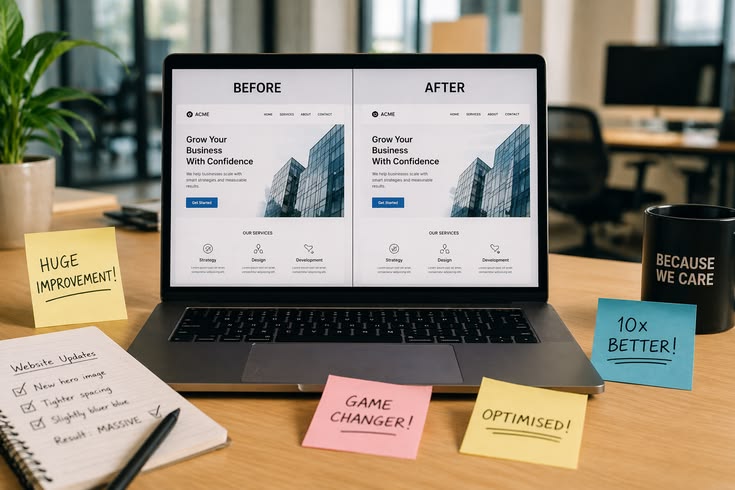
Imagine a business says it needs a new website.
The immediate response might be to discuss:
Colours.
Pages.
Photography.
Features.
Layouts.
But why does the business want a new website?
Perhaps the existing one doesn’t explain the company’s expanded services.
Maybe customers struggle to find information.
Perhaps the business has moved into a new market and the website no longer reflects its positioning.
Maybe the current site looks outdated compared with the competitors it now wants to compete against.
The website is the deliverable.
The business problem is somewhere underneath it.
And that is where a useful brief begins.
“Make It Look Premium” Isn’t a Brief
This is one of the most common requests in branding.
“We want it to look premium.”
But premium can mean completely different things to different businesses.
For one audience, premium might mean minimal and understated.
For another, it might mean bold and expressive.
For another, it might mean highly detailed, luxurious and tactile.
Without context, “premium” gives a creative team an adjective.
It doesn’t give them a direction.
A stronger brief might explain:
“We have moved into a higher-value market and need our presentation to reflect the level of service and clients we now serve.”
Now there is something to solve.
The design can respond to the business objective rather than simply trying to make something look expensive.
The Best Briefs Explain the Gap
A useful way to think about a branding brief is:
Where are we now, and where do we need the brand to take us?
That gap could be:
Perception:
People don’t see the business at the level it has reached.
Clarity:
Customers don’t fully understand what the company offers.
Growth:
The existing brand was created for a smaller business.
Experience:
Different touchpoints feel disconnected.
Launch:
A new product or service needs to enter the market with the right positioning.
Scale:
The business now needs branding that can work across more people, products or locations.
Once the gap is understood, the deliverables become easier to define.
The Five Questions Every Branding Brief Should Answer
You don’t need a 30-page document to start a strong branding project.
But you do need the right information.
1. What is happening in the business?
What has changed?
Is the company growing, repositioning, launching, expanding or trying to solve a current problem?
2. What isn’t working?
Where is the current brand falling short?
Is it confusing, inconsistent, outdated, difficult to use or simply no longer appropriate?
3. Who needs to experience the change?
The answer may be customers.
But it could also be employees, partners, investors, visitors or a combination of audiences.
4. What should be different afterwards?
What should people understand, feel or do differently once the project is complete?
5. How will you know it worked?
Better perception?
Easier customer interaction?
More consistent materials?
A clearer digital experience?
A workspace that supports the way the team actually works?
A strong brief gives the project something to measure against.
The Audience Changes the Solution
The same branding request can require completely different solutions depending on who will experience it.
A corporate presentation for investors is not the same as packaging for consumers.
An employee welcome kit is not the same as a client appreciation gift.
A workspace designed for a technology company may need different environments from one designed for a traditional professional-services firm.
The product may be similar.
The purpose is different.
That is why audience should never be an afterthought in the brief.
Constraints Are Part of the Brief Too
Good branding doesn’t happen in a vacuum.
There may be a budget.
A deadline.
Existing brand guidelines.
A difficult physical space.
A large quantity.
Multiple locations.
A specific production requirement.
A launch date that cannot move.
These aren’t minor details to reveal halfway through the project.
They help shape the right solution from the beginning.
A creative idea that cannot realistically be produced, delivered or maintained is not necessarily a better idea.
Good branding has to work in the real world.
A Better Brief Can Change the Entire Project
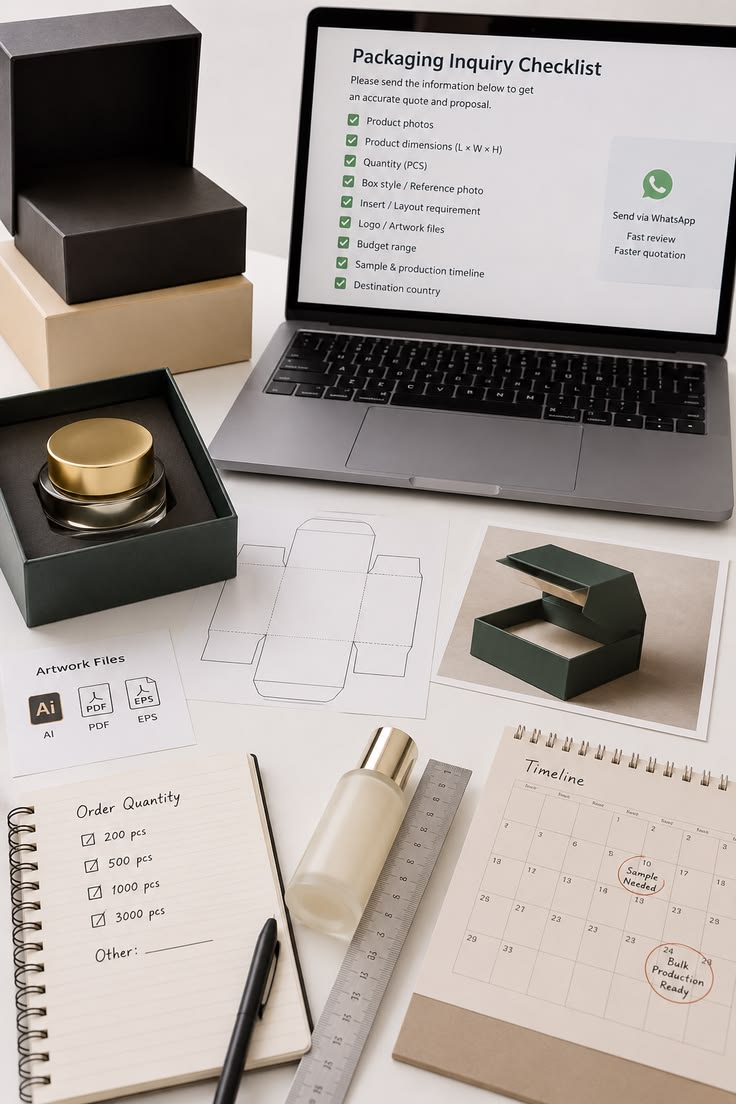
Imagine a company approaches Branda asking for branded notebooks for a conference.
The obvious project is notebook printing.
But perhaps the actual objective is to make the company memorable to high-value attendees after the event.
That changes the conversation.
Maybe the notebook needs to become part of a larger event kit.
Maybe packaging matters.
Maybe the design needs to work with other event materials.
Maybe the item should be useful enough to remain on desks long after the conference.
The requested product hasn’t changed.
The thinking behind it has.
That is what a better brief makes possible.
The Brief Is Where Strategy Meets Execution
A good branding partner shouldn’t simply ask:
“What do you want us to produce?”
They should also be interested in:
“What are you trying to achieve?”
Because the answers to those questions can lead in very different directions.
A business may ask for a new logo when what it really needs is a clearer positioning.
It may ask for merchandise when what it needs is a stronger employee experience.
It may ask for packaging when what it really needs is a way to communicate a higher-value product.
It may ask for a new office when the deeper issue is that the existing space no longer supports the way the business operates.
The brief helps reveal the difference.
This Is Why Branda Looks Beyond Individual Deliverables
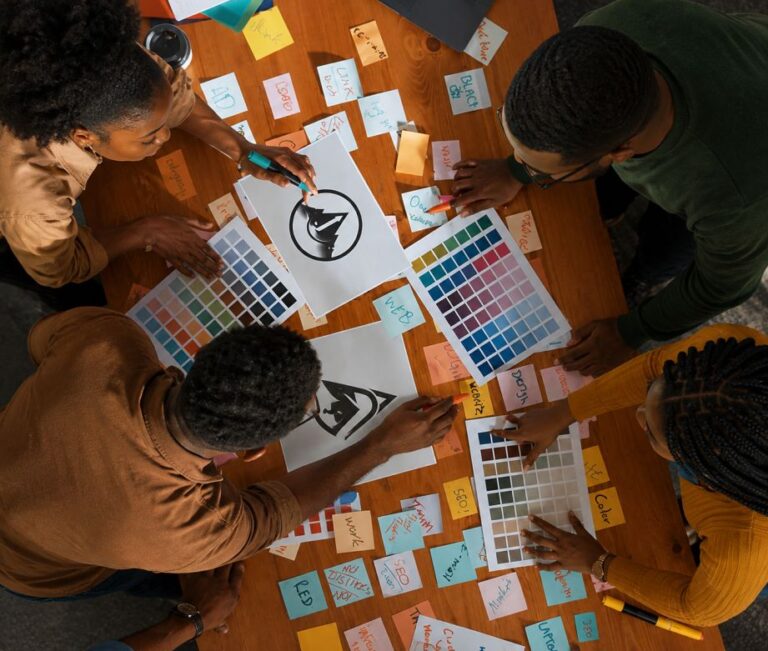
Branda works across different parts of brand development, from web development and printing to merchandise, packaging, corporate gifting and workspace solutions.
That range makes one principle particularly important:
The deliverable should serve the business objective, not the other way around.
A website should solve a business need.
A printed piece should have a purpose.
A corporate gift should suit the relationship.
A workspace should support how people work.
A physical brand asset should make sense within the wider brand.
The better the brief, the easier it becomes to connect those decisions.
Before You Start Your Next Branding Project
Before sending a supplier:
“We need 500 branded items.”
Or:
“We need a new website.”
Or:
“We need to redesign our packaging.”
Pause.
Ask:
What changed?
What problem are we trying to solve?
Who is this for?
What should they experience?
What needs to be different when this is finished?
The answers may change the project completely.
And that’s a good thing.
Final Thought
The best branding projects don’t begin with a colour palette.
They don’t begin with a logo.
They don’t even begin with a list of deliverables.
They begin with understanding.
What is happening in the business?
What isn’t working?
Who are we trying to reach?
What do we want to change?
Once those questions are clear, the creative work has somewhere meaningful to go.
A better brief doesn’t simply make a branding project easier to execute.
It makes it more likely that you’re solving the right problem in the first place.
Start With the Problem. Build From There.
Whether you need a website, packaging, merchandise, corporate gifting, print materials or workspace solutions, Branda helps businesses turn business needs into connected brand solutions.
Because better branding doesn’t begin with what you want produced. It begins with understanding what you need to achieve.
