


₦0
What Does a Modern Fintech Actually Need From Its Workspace?
For years, an office was relatively easy to define.
Desks. Meeting rooms. A reception area. Perhaps a kitchen.
But businesses have changed.
For a modern fintech, a workspace may need to support focused work, collaboration, client meetings, content creation, team culture and opportunities to recharge, all within the same environment.
The challenge isn’t simply finding enough space.
It’s creating an environment where these different activities can coexist.
So, what should a modern fintech actually expect from its workspace?
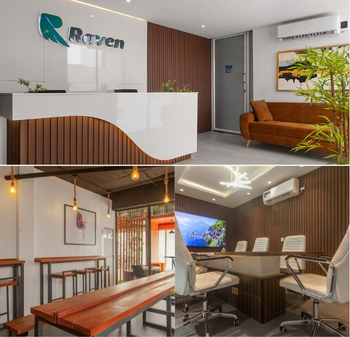
Project Raven, a fintech workspace developed by Branda in Lekki Phase 1, Lagos, offers an interesting answer.
1. A Workspace That Supports Different Ways of Working
Not every task requires the same environment.
Focused work requires concentration. Collaboration requires interaction. Client meetings require privacy and professionalism. Informal conversations may happen over coffee or away from a traditional meeting table.
A modern workspace should therefore give people options.
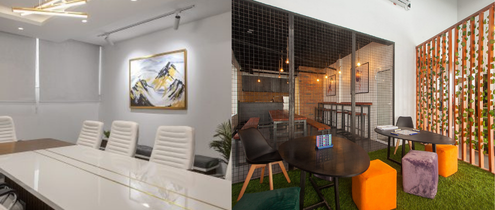
At Raven, different environments were created to support different activities, including collaborative work areas, a work café, meeting spaces and breakout areas.
The principle is simple:
When the work changes, the environment should be able to change with it.
2. Culture Needs Physical Space Too
Productivity is important, but people aren’t machines moving between desks and meetings.
They talk.
They build relationships.
They take breaks.
They celebrate.
They need opportunities to step away from work.
Raven’s game area, brick bar and breakout spaces introduce a more social dimension to the workplace.
These aren’t simply decorative additions. They acknowledge that workplace culture is built through everyday interactions, not just formal meetings.
A good workspace should communicate that the business values performance and the people responsible for it.
3. The Office Can Become a Content Studio
One of the most interesting changes in modern workplaces is that the office isn’t necessarily only where internal work happens.
It’s also becoming a place where businesses create content.
Podcasts.
Webinars.
Interviews.
Product announcements.
Social media content.
Thought-leadership conversations.
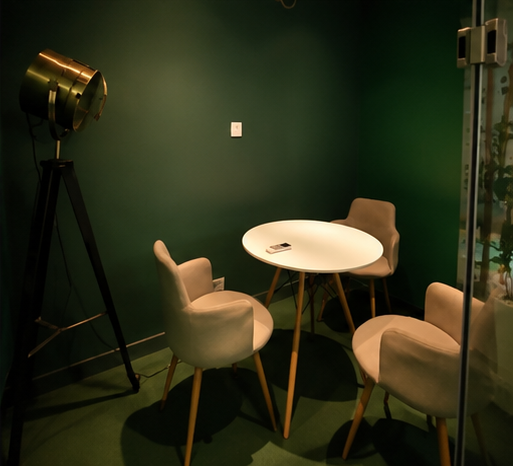
Raven’s recording studio and meeting/green room were designed to support activities such as podcasts, webinars, content shoots and live streams.
This turns the workspace into part of the company’s communication infrastructure.
Instead of leaving the office every time the business needs to create content, the environment itself can support that process.
For a modern brand, that’s a valuable capability.
4. Your Workspace Is Part of the Customer Experience
Employees aren’t the only people experiencing an office.
Clients walk through the reception.
Partners enter meeting rooms.
Candidates visit for interviews.
Investors may come for meetings.
Every visitor forms an impression.
That’s why spaces such as reception areas and lobbies aren’t simply transitional spaces. They are part of the customer experience.
The physical environment communicates things that a website or presentation cannot always convey:
Professionalism. Confidence. Organization. Ambition.
When the workspace reflects the brand, visitors don’t need to be told what kind of company they’re dealing with.
They can experience it.
5. Design for the Business You’re Becoming
A growing fintech won’t necessarily work the same way six months or two years from now.
Teams change.
Headcount changes.
New departments appear.
Work patterns evolve.
Technology changes.
A workspace designed only around today’s needs can quickly become restrictive.
That’s why good workspace planning asks a bigger question:
What will this business need the space to support next?
Raven’s combination of work areas, meeting spaces, social environments and content-focused facilities reflects this broader way of thinking.
The goal isn’t simply to create an office that works today.
It’s to create an environment with enough flexibility to support what’s coming next.
A Workspace Is Also a Physical Expression of Your Brand
Your brand may live on your website, social media, packaging and marketing materials.
But it also lives in your physical environment.
The colours.
The furniture.
The lighting.
The materials.
The layout.
The way visitors move through the space.
Together, these details communicate something about the organisation behind them.
That’s why workspace design shouldn’t be treated as completely separate from branding.
If a company presents itself as innovative but operates from an environment that feels disconnected from that promise, there’s a gap.
A thoughtfully designed workspace helps close it.
What Project Raven Ultimately Shows
The most important lesson from Raven isn’t how many spaces were created.
It’s the thinking behind them.
A modern workspace needs to answer practical questions:
Where does focused work happen?
Where do teams collaborate?
Where do people connect?
Where do clients experience the brand?
Where does content get created?
Where can employees recharge?
Once those questions are answered, design becomes more purposeful.
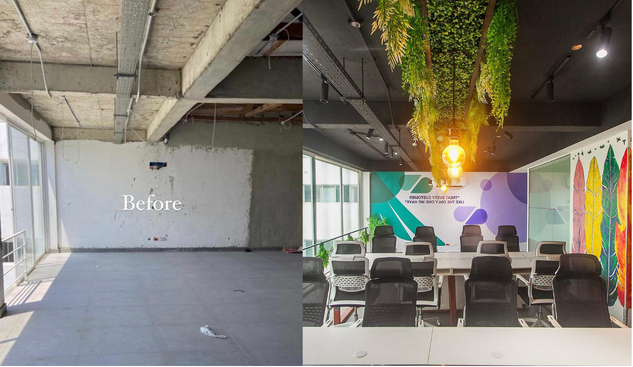
Project Raven started with an unfinished property and became an environment designed to support work, collaboration, culture, content creation and customer experience.
Not because more rooms are automatically better.
But because different kinds of work require different kinds of environments.
From Office Space to Business Infrastructure
A workspace is more than square metres and furniture.
It influences how people work.
How teams interact.
How clients experience the company.
How content gets created.
And how employees experience the organisation they spend much of their day inside.
That is why workspace development deserves the same strategic thinking that goes into a website or brand identity.
The right environment doesn’t simply accommodate the business.
It helps the business work better.
How Branda Approaches Workspace Development
Project Raven demonstrates Branda’s approach to creating workspaces around the needs of the businesses using them.
Rather than treating furniture, layout, technology, branding and functionality as disconnected decisions, Branda brings them together to create one cohesive environment.
The result is a workspace designed not simply to look good, but to support the way the business actually operates.
Final Thought
A modern fintech doesn’t simply need an office.
It needs an environment that helps its people work, connect, create and grow.
And the question shouldn’t be:
“How do we make our office look modern?”
It should be:
“What does our business need this space to make possible?”
That’s where good workspace design begins.
Sometimes, the answer starts with an empty room.
Building a Workspace Around Your Business?
Whether you’re developing a new office, renovating an existing space or starting with an unfinished property, Branda brings workspace planning, design, furniture, branding and execution together to create an environment built around how your business actually works.
Your office should do more than accommodate your business. It should help your business work better.
