


₦0
When Your Brand Leaves the Screen: Why Print Still Matters

Most brand interactions today happen on screens.
A customer sees your advert.
Visits your website.
Reads your email.
Scrolls past your social media post.
Clicks away.
The next piece of content replaces yours almost immediately.
Print operates differently.
A brochure can sit on a desk.
A business card can stay in a wallet.
A presentation folder can move from one meeting to another.
A printed proposal can be opened, highlighted and revisited.
Packaging can remain in a customer’s home long after the purchase.
Print gives your brand something digital often cannot:
physical presence.
And in a world where almost everything is competing for attention on a screen, that can matter more than ever.
Digital Is Fast. Print Has Staying Power.
Digital communication is built for speed.
You can publish a campaign in minutes, update a website instantly and send an email to thousands of people at once.
That speed is powerful.
But speed also comes with something else:
disappearance.
A social post gets replaced.
An advert disappears when the campaign ends.
An email gets buried.
A printed piece can remain.
That doesn’t automatically make print better than digital.
It gives it a different job.
Digital can help your brand appear.
Print can help your brand remain.
Print Creates a Different Kind of Attention
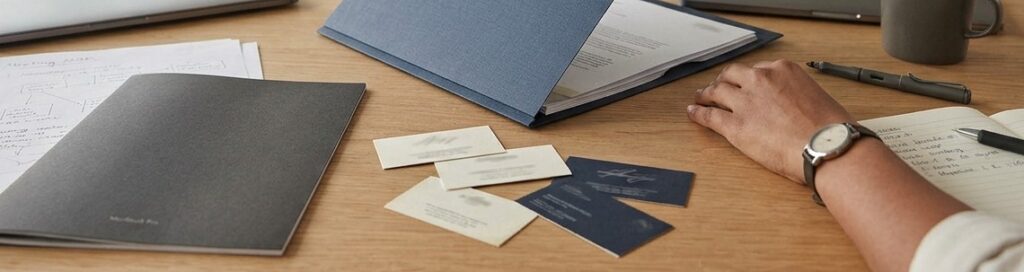
Think about the difference between seeing a brochure online and holding one in your hands.
Online, you can move on with one swipe.
Physically, the object occupies space.
You notice the paper.
The size.
The texture.
The weight.
The layout.
You turn a page.
You put it down.
You pick it up again.
That physical interaction changes the way the information is encountered.
Print asks for a different kind of attention.
Not necessarily more attention.
A different kind.
And that makes it especially useful when a brand needs to communicate something people may want to examine rather than simply scroll past.
The Material Becomes Part of the Message
A printed piece communicates before someone reads the first sentence.
The paper says something.
The finish says something.
The format says something.
Even the decision to print something says something.
A high-quality company profile can signal care and confidence.
A thoughtfully produced presentation folder can make a proposal feel more substantial.
A well-designed business card can make a simple exchange more memorable.
The words may communicate the message.
The physical object helps communicate the standard.
That is why print should not be reduced to putting digital artwork onto paper.
Print Can Give a Brand a Longer Life
Some brand interactions are measured in seconds.
Others can last for months.
A business card may remain in a wallet until the person needs the contact.
A brochure may sit in a drawer until someone needs the information inside it.
A branded notebook can become part of someone’s work routine.
Packaging can stay in a home long after the product has been used.
The printed piece doesn’t need to be constantly noticed to remain valuable.
It simply needs to remain available.
That gives physical branding a form of persistence that many digital interactions don’t naturally have.
Your Printed Material Has a Second Audience
This is one of the most interesting things about print.
The person you hand a brochure to may not be the only person who sees it.
A presentation folder can appear in another meeting.
A business card can be passed to a colleague.
A product package can be seen by someone who didn’t make the purchase.
A printed company profile can move from one decision-maker to another.
Suddenly, one physical item can travel beyond the original interaction.
The brand has gained another opportunity to be discovered.
Print Works Best When It Has a Purpose
The argument for print should not be:
“Businesses need to print everything.”
They don’t.
A poorly thought-out flyer is not automatically valuable because it is physical.
Print is strongest when the format suits the job.
A product may need packaging.
A sales team may need presentation materials.
An event may need signage or printed collateral.
A business may need professional stationery.
A customer may need something they can keep and refer to.
The question should not be:
“Should we print?”
It should be:
“Would making this physical improve the way people experience or use this information?”
The Best Print Doesn’t Compete With Digital. It Extends It.
The most effective brands don’t choose between physical and digital experiences.
They connect them.
A brochure can direct someone to a website.
A business card can lead to a digital profile.
Packaging can introduce social channels.
Printed event materials can point people toward online resources.
A physical product can become the starting point for a digital conversation.
The screen and the printed page don’t have to compete.
One can lead to the other.
That is where print becomes part of a modern brand ecosystem rather than a leftover from an older marketing era.
Why This Still Matters for Growing Businesses
As businesses grow, their communication becomes more complex.
More clients.
More employees.
More events.
More products.
More presentations.
More locations.
More customer touchpoints.
That creates more situations where information needs to exist beyond a screen.
Print gives businesses a way to make important information portable, shareable and physical.
And because physical materials remain part of the environment, they can continue representing a business after the original conversation has ended.
Where Branda Comes In
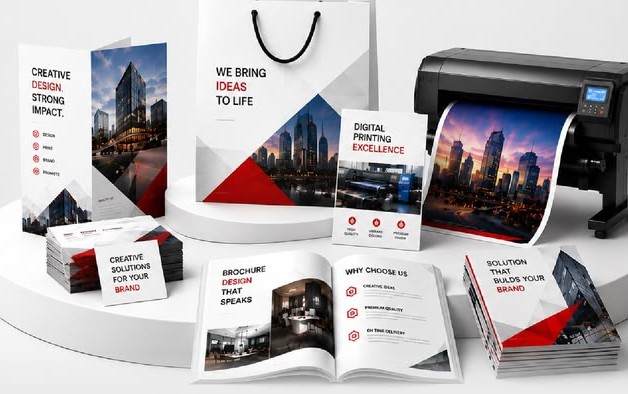
Branda’s print offering covers a broad range of business materials, from business cards and brochures to letterheads, packaging, posters, stickers and other printed assets.
But the value of print isn’t the number of things a business can produce.
It’s choosing the right physical touchpoint for the right moment.
A business card should serve an introduction.
A brochure should help someone understand.
A presentation folder should support a business conversation.
Packaging should contribute to the product experience.
Good print has a job to do.
Your Brand Deserves a Life Beyond the Screen
The digital world has made it easier than ever to reach people.
But reaching someone and remaining with them are different things.
Print creates another possibility.
Your brand can become something people hold.
Something they keep.
Something they pass on.
Something that remains within reach after the screen is gone.
That doesn’t make print outdated.
It makes it different.
Final Thought
The question isn’t whether print replaced digital.
It didn’t.
The better question is:
What can your brand do in the physical world that it cannot do on a screen?
It can occupy space.
It can be handled.
It can be kept.
It can be shared.
It can become part of someone’s environment.
And sometimes, when everything else is competing to disappear with the next scroll, that physical presence is exactly what makes a brand worth remembering.
Give Your Brand Something to Hold Onto
From business cards and brochures to packaging, presentation materials and other printed brand assets, Branda helps businesses turn digital identities into physical experiences.
Because sometimes the best way to make a brand memorable is to give people something they can actually keep.
