


₦0

Businesses spend a lot of time watching other businesses.
What are they launching?
What are they posting?
What do their websites look like?
What are they offering?
How are they positioning themselves?
Competitive awareness matters.
But sometimes, the thing holding a brand back isn’t another company.
It’s something much quieter.
Familiarity.
The belief that the current website is good enough.
The brochure is still usable.
The packaging still works.
The office hasn’t changed.
The same message has been used for years.
The same customer experience continues because:
“That’s how we’ve always done it.”
And that can become a much bigger problem than it appears.
Because while the business is standing still, the expectations around it may be moving.
Familiar Doesn’t Always Mean Relevant
There is comfort in familiarity.
A process has already been created.
A logo is already in place.
The website already exists.
Suppliers are already available.
Employees already know what to use.
Changing any of it takes effort.
So businesses naturally ask:
“Why change something that isn’t broken?”
The problem is that a brand doesn’t always become outdated because something breaks.
Sometimes it becomes outdated because the business changes around it.
The customers change.
The market changes.
The product changes.
The company grows.
The expectations change.
And suddenly, yesterday’s branding no longer represents today’s business.
The Status Quo Is a Powerful Competitor
A competitor has to convince your customers to choose them.
The status quo doesn’t.
It simply keeps you where you are.
It encourages businesses to postpone:
The website refresh.
The packaging update.
The new brand system.
The workspace improvement.
The customer experience redesign.
The better communication.
One month becomes six.
Six months becomes two years.
Eventually, the business isn’t necessarily failing.
It has simply stopped moving forward in the places customers can see.
Sameness Can Be Harder to Notice Than Poor Branding
Poor branding is often obvious.
Sameness is more subtle.
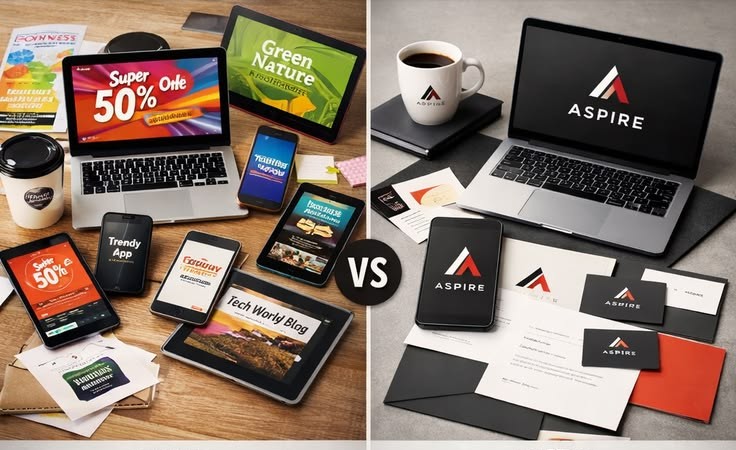
Look at an industry where every business uses similar language, similar visuals, similar websites and similar promises.
Everyone says:
Quality.
Professional.
Trusted.
Reliable.
Customer-focused.
Nothing is necessarily wrong with those words.
But when everyone says the same thing, they stop doing much to distinguish anyone.
A brand doesn’t always need to be louder.
Sometimes it simply needs to be more specific about what makes it itself.
That could be its perspective.
Its experience.
Its audience.
Its personality.
Its process.
Its way of solving the customer’s problem.
Growth Can Make Yesterday’s Brand Feel Smaller
A business can evolve faster than its identity.
You might start by serving a small local audience.
Then you expand.
Your team grows.
Your services multiply.
You begin working with larger organisations.
Your physical environment changes.
Your customer expectations become more sophisticated.
Yet the brand still communicates the company you were at the beginning.
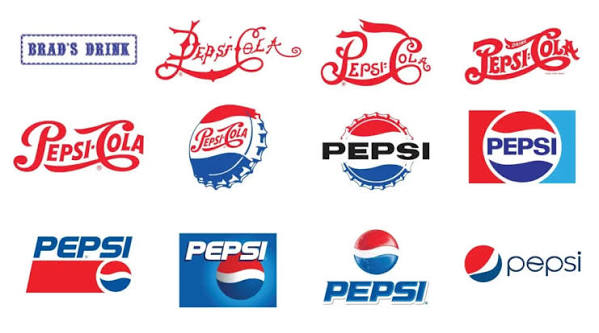
This is one reason businesses outgrow their branding.
Not because the original identity was necessarily bad.
Because the business has become bigger than the story its brand is telling.
That is very different from simply losing customers to a competitor.
The Most Dangerous Phrase Might Be “We’ve Always Done It This Way”
This phrase can protect a business from unnecessary change.
It can also prevent useful change.
A business keeps using the same printed materials because they worked before.
The same type of merchandise is ordered for every event.
The same website structure is maintained even though the business has expanded.
The same office layout remains even though the way people work has changed.
The same message continues even though the audience has changed.
Tradition can be valuable.
But a brand should not preserve a decision simply because it is old.
It should preserve what still works.
And improve what no longer does.
Your Brand Doesn’t Have to Change Just to Look New
Evolution isn’t the same thing as constant redesign.
A business shouldn’t change its identity every time a new design trend appears.
The question is not:
“How can we make this newer?”
It is:
“Is this still helping us represent the business we are today?”
Sometimes the answer is yes.
Sometimes only one part needs to change.
A website may need to evolve without replacing the entire identity.
Packaging may need improvement without changing the product.
A workspace may need to adapt without becoming unrecognisable.
A brand can evolve while keeping the parts people already know.
Relevance Is Built in the Details
A brand stays relevant through many small decisions.
How quickly information can be found.
How clearly the business explains what it does.
How products are packaged.
How materials are presented.
How employees experience the workplace.
How customers are welcomed.
How the company communicates after a purchase.
None of these moments has to become extraordinary.
They simply need to make sense for the business now.
Relevance is often less about dramatic change and more about paying attention.
The Real Question Isn’t “Who Are We Competing With?”
That question still matters.
But businesses should also ask:
Are we still giving people a reason to notice us?
Are we making it easy to understand what has changed about our business?
Does the experience match the level we’ve reached?
Would a new customer understand why we’re different?
Are we still solving today’s problems with yesterday’s brand decisions?
Those questions can reveal problems that a competitor analysis might not.
This Is Where the Different Parts of a Brand Start Working Together
A business may discover that the problem isn’t one particular asset.
Its website may reflect an older positioning.
Its printed materials may use outdated information.
Its merchandise may feel disconnected from the current identity.
Its workspace may no longer support its team.
Its packaging may not reflect the quality of the product.
Its communication may still sound like the company from five years ago.
These are different problems.
But they can all point to the same underlying issue:
the business has evolved, but the brand has not evolved with it.
This is where thinking about the brand as a connected system becomes useful.
Where Branda Fits
Branda works across multiple areas of brand development, from Creative and Digital to Studio, Gifts and physical production.
Each branch serves a different purpose.
But the reason they belong within the same ecosystem is simple:
A business does not experience its brand one service at a time.
A growing company may need a new visual direction.
Then a website that expresses it.
Then printed materials.
Then merchandise.
Then a workspace that reflects the new identity.
Then corporate gifting that carries the same feeling into customer and employee relationships.
The individual needs are different.
The business behind them is still one.
Don’t Let Familiarity Become Your Brand Strategy
Your biggest branding competitor may never send you a proposal.
It may never launch a competing campaign.
It may never contact your customers.
It may simply be the decision to keep everything exactly as it is.
Sometimes that’s the right decision.
But it should be a conscious one.
Because a brand deserves regular questioning.
Does this still represent us?
Does this still serve our audience?
Does this still fit where the business is going?
If the answer is no, doing nothing isn’t neutral.
It is a decision too.
Final Thought
Businesses naturally watch their competitors.
But some of the biggest threats to relevance come from inside the business itself.
Comfort.
Inertia.
Sameness.
Outdated assumptions.
The belief that what worked before must still be right now.
Your brand doesn’t need to change constantly.
It does need to stay connected to the business it represents.
Because the goal of branding isn’t to look different every year.
It’s to remain meaningful as the business changes.
And sometimes the first step isn’t looking at your competitors.
It’s looking at your own brand and asking:
“Does this still look, sound and feel like the business we’ve become?”
Keep Your Brand Moving With Your Business
As businesses evolve, different parts of their brand may need to evolve with them. Branda helps businesses develop connected brand experiences across Creative, Digital, Studio, Gifts and physical brand production.
Don’t change your brand just to keep up. Change it when the business has moved forward and the brand needs to catch up.
